
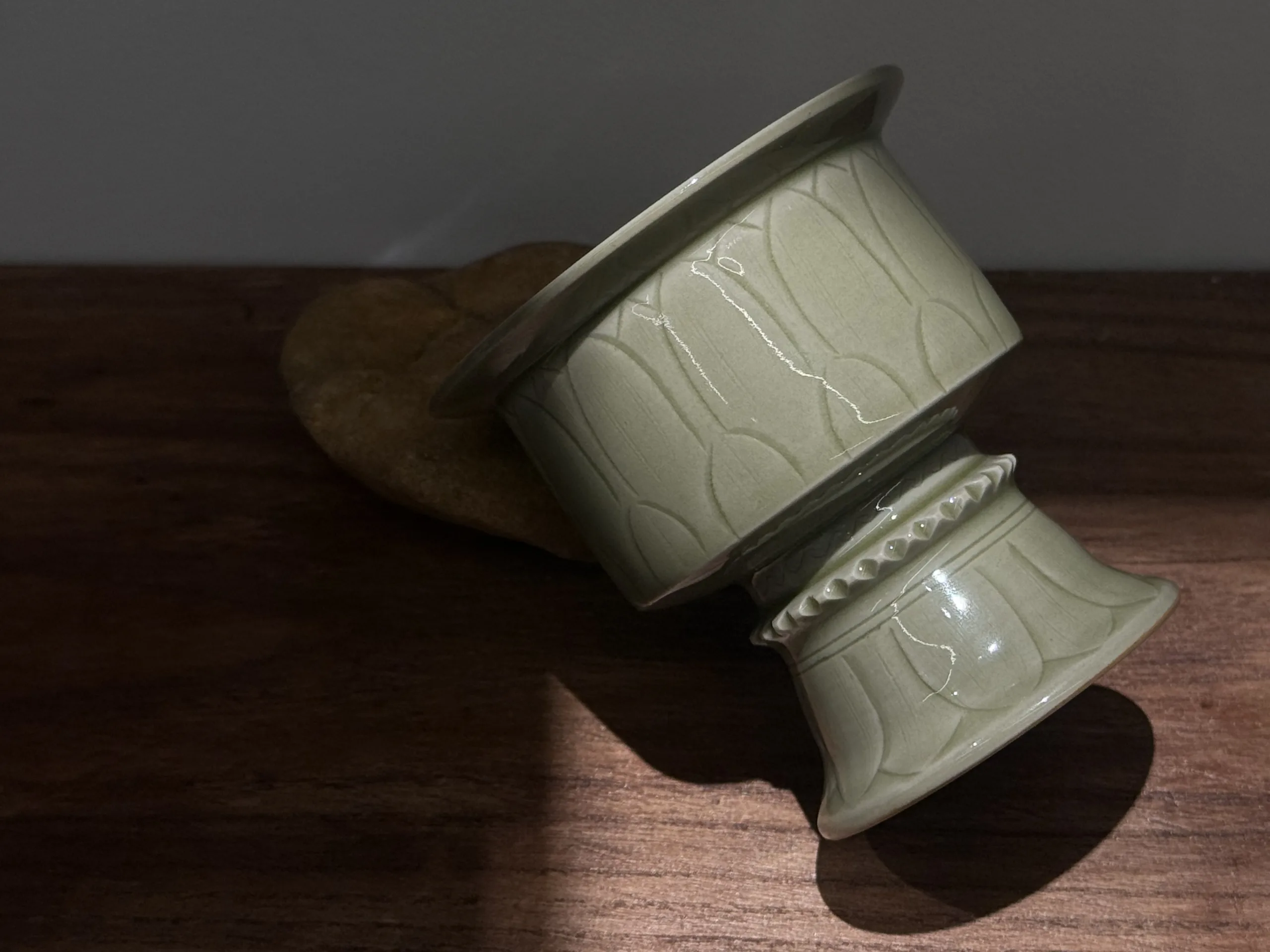
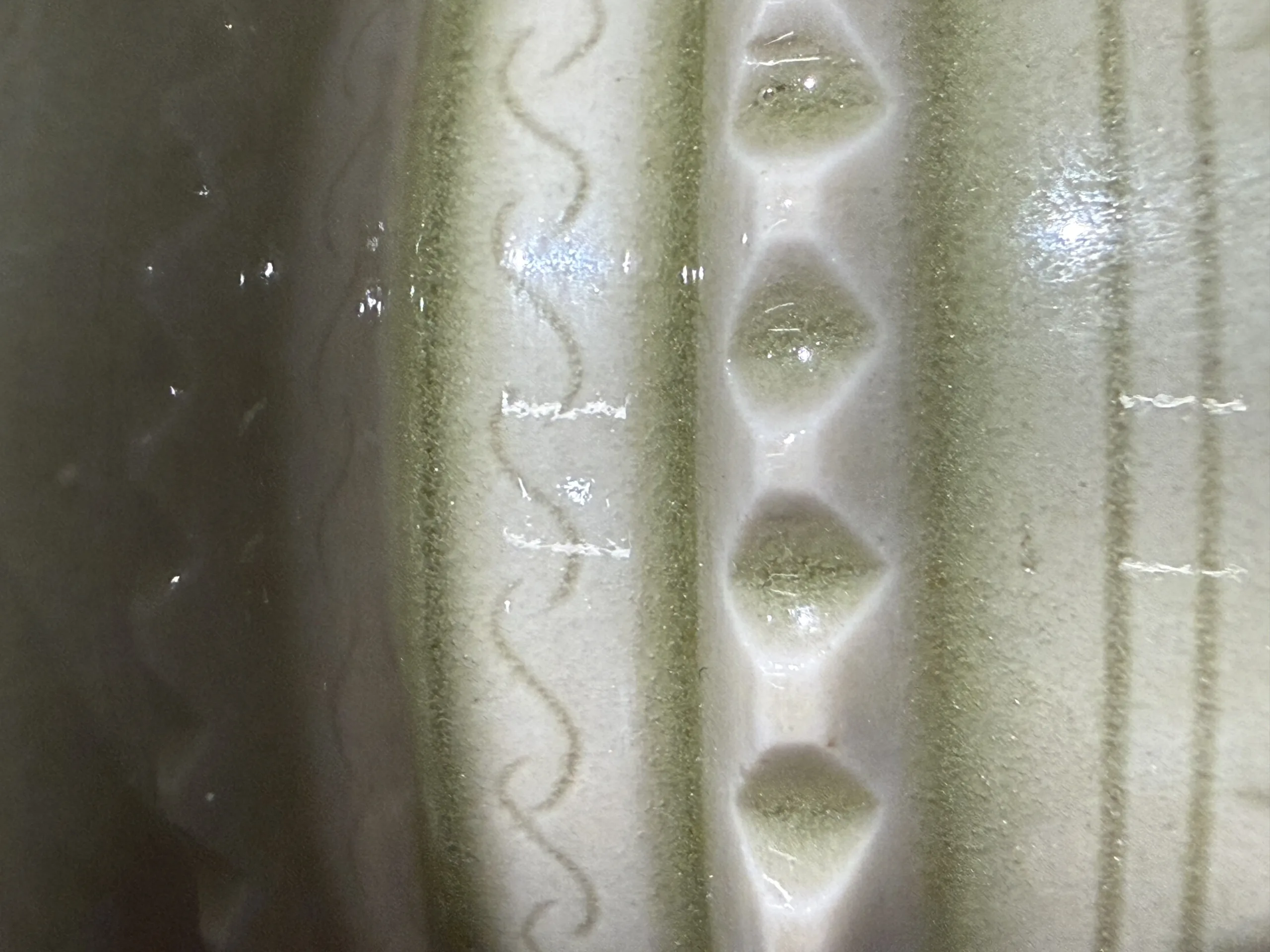
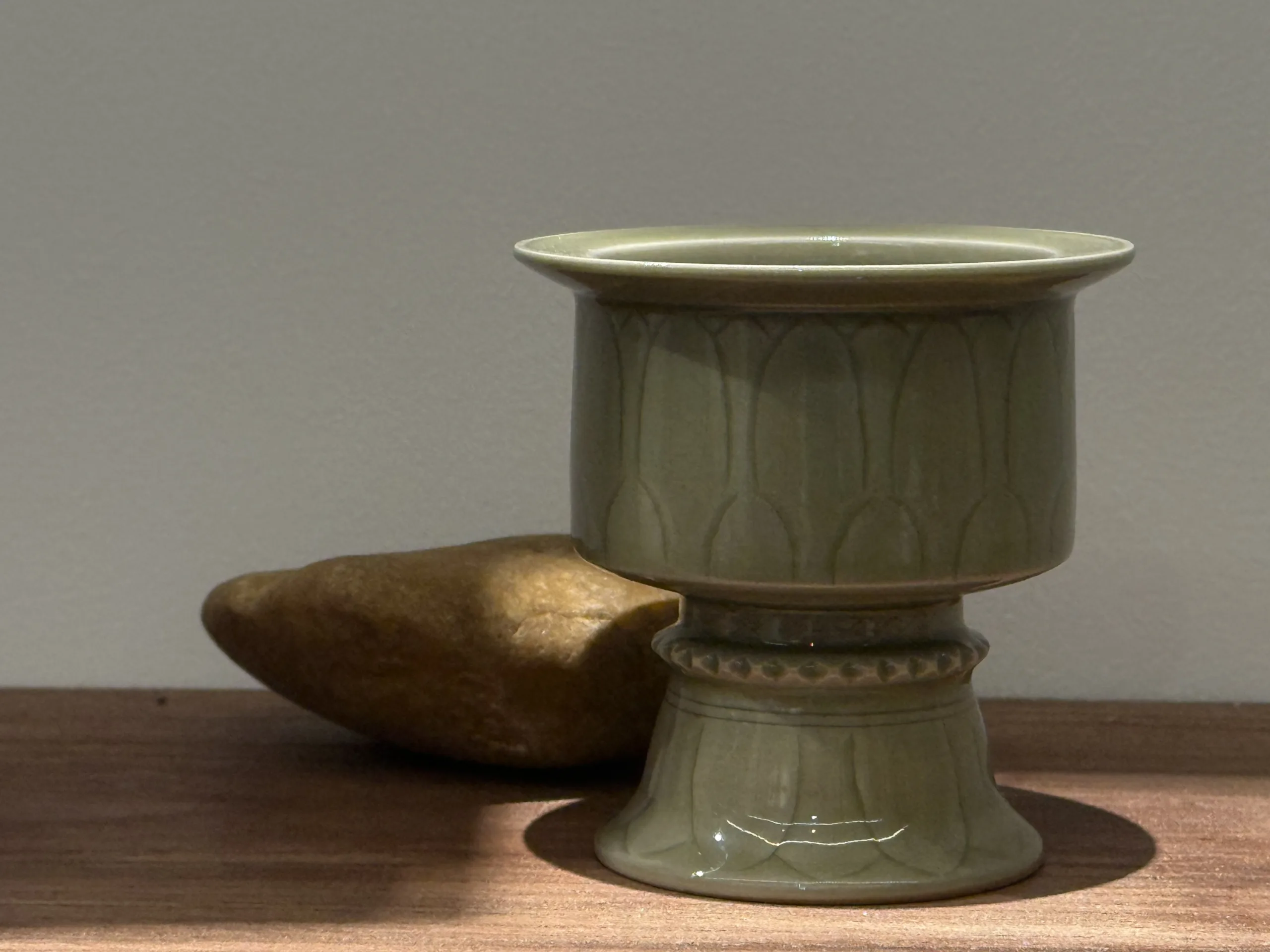
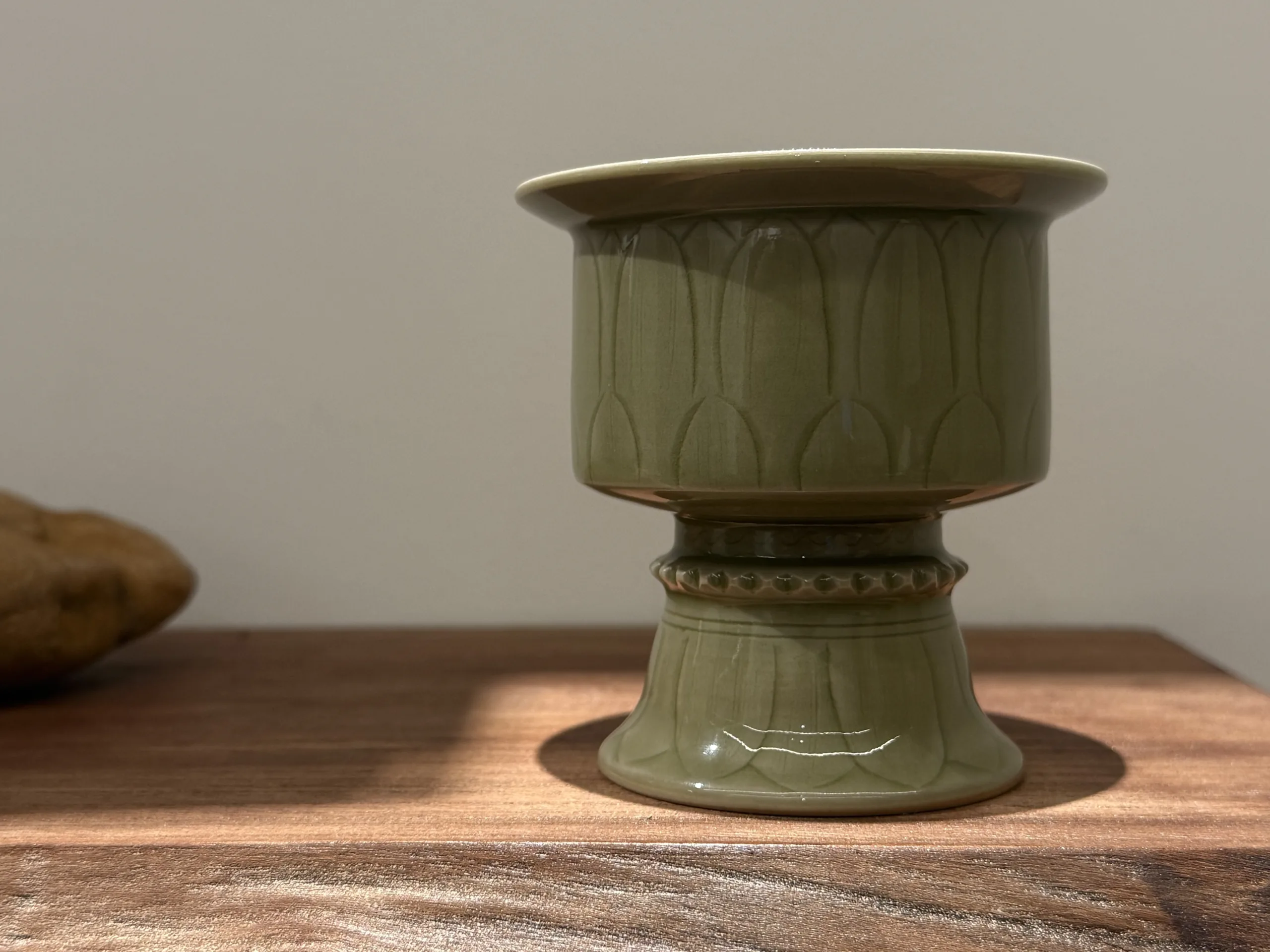
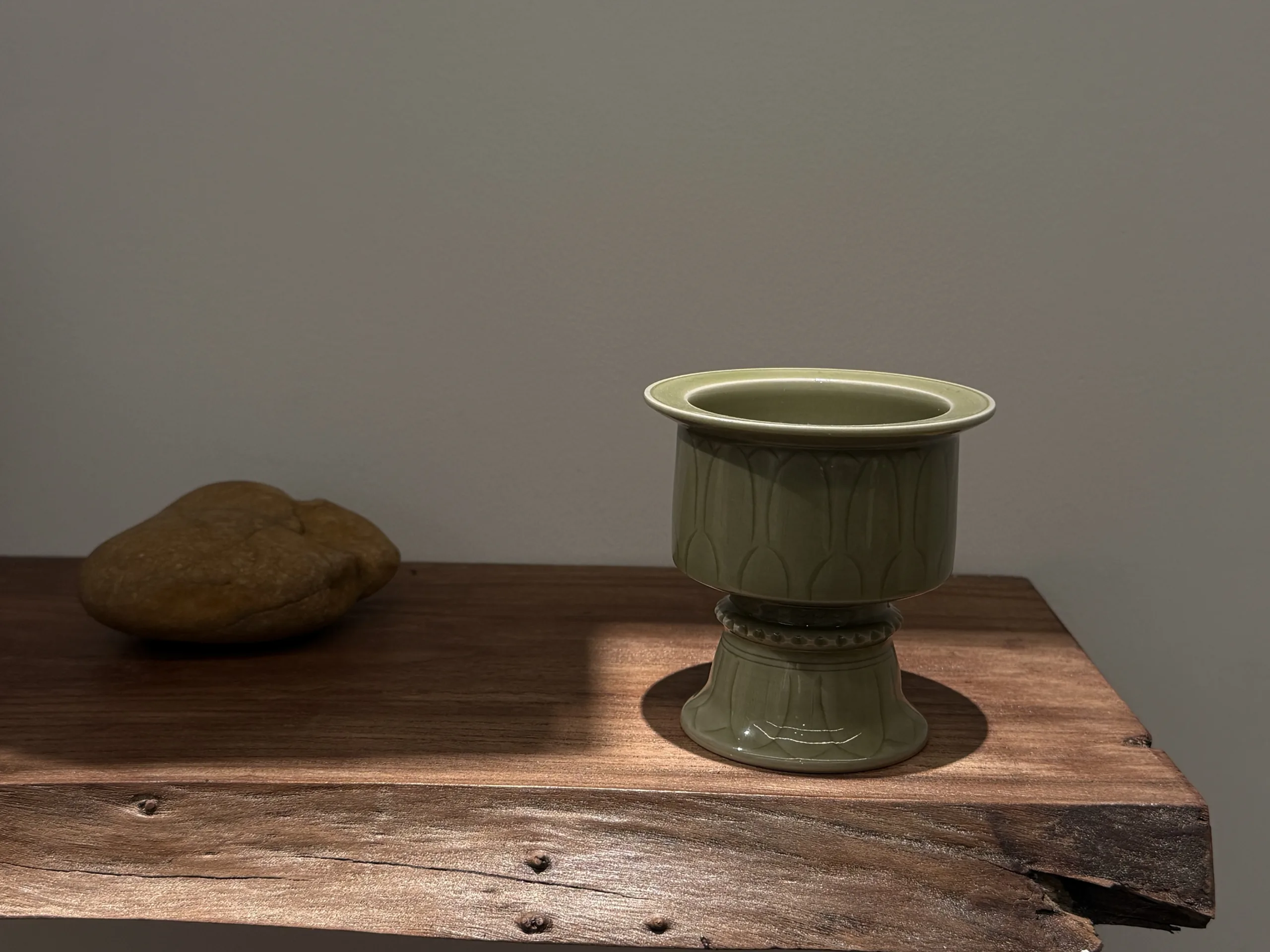
Longquan Celadon · Secret-Color Lotus Petal High-Foot Incense Burner
There is celadon that carries the fragrance of a temple.
$269.28
1 in stock
Specifications: 9cm (H) × 9cm (mouth) | Material: Ceramic (Celadon) | Colour: Secret-color
Place of Origin: Zhejiang, China
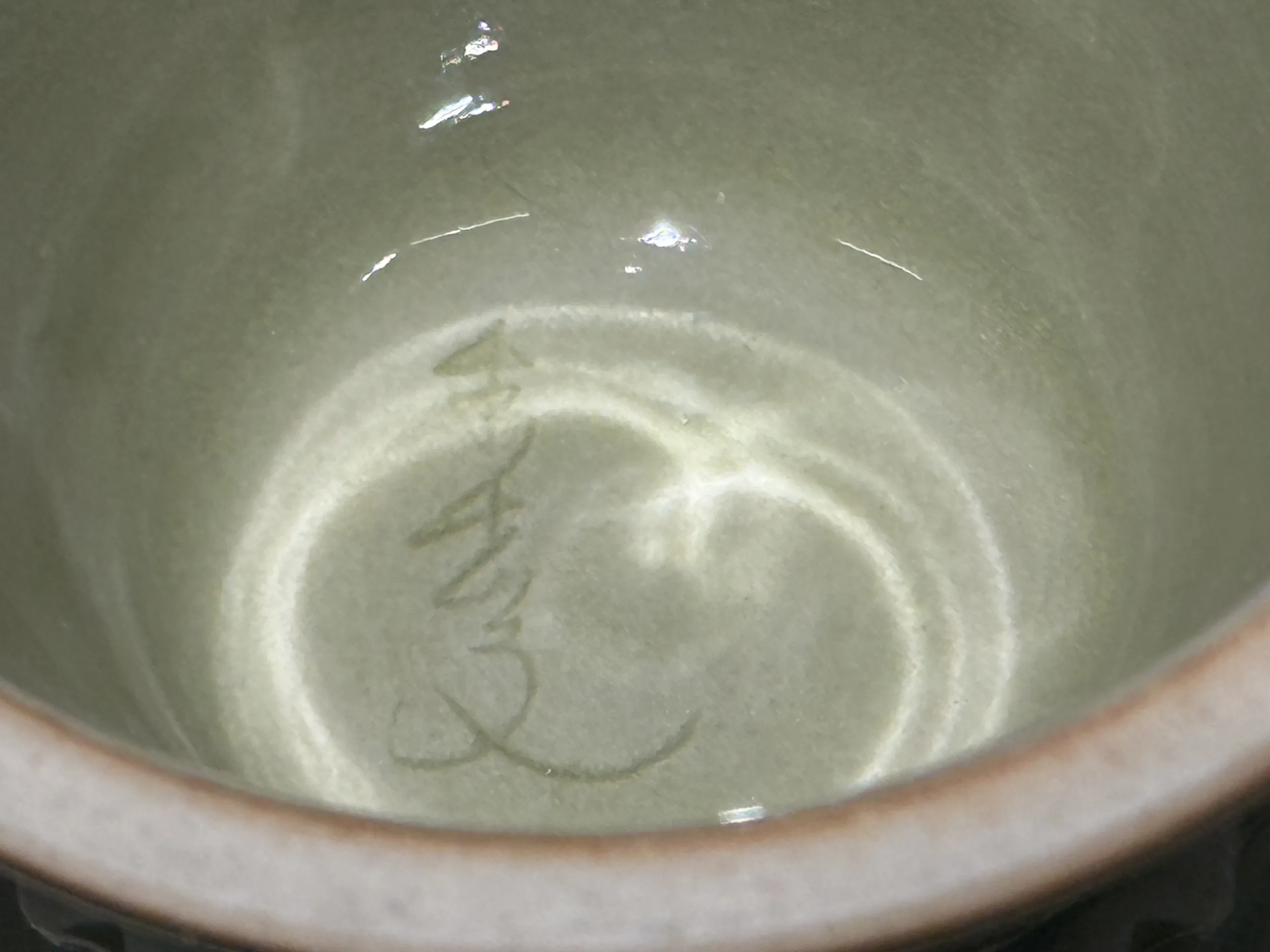
Handcrafted by Zhu Zhiwen (Longquan Archaistic Celadon Artisan)
Handcrafted. One of a kind. Signed collector’s certificate included.
This incense burner is made by Zhu Zhiwen, an artisan from a celadon family in Longquan. Zhu Zhiwen specialises in archaistic Longquan celadon, devoting himself to the study of ancient forms and glazes.
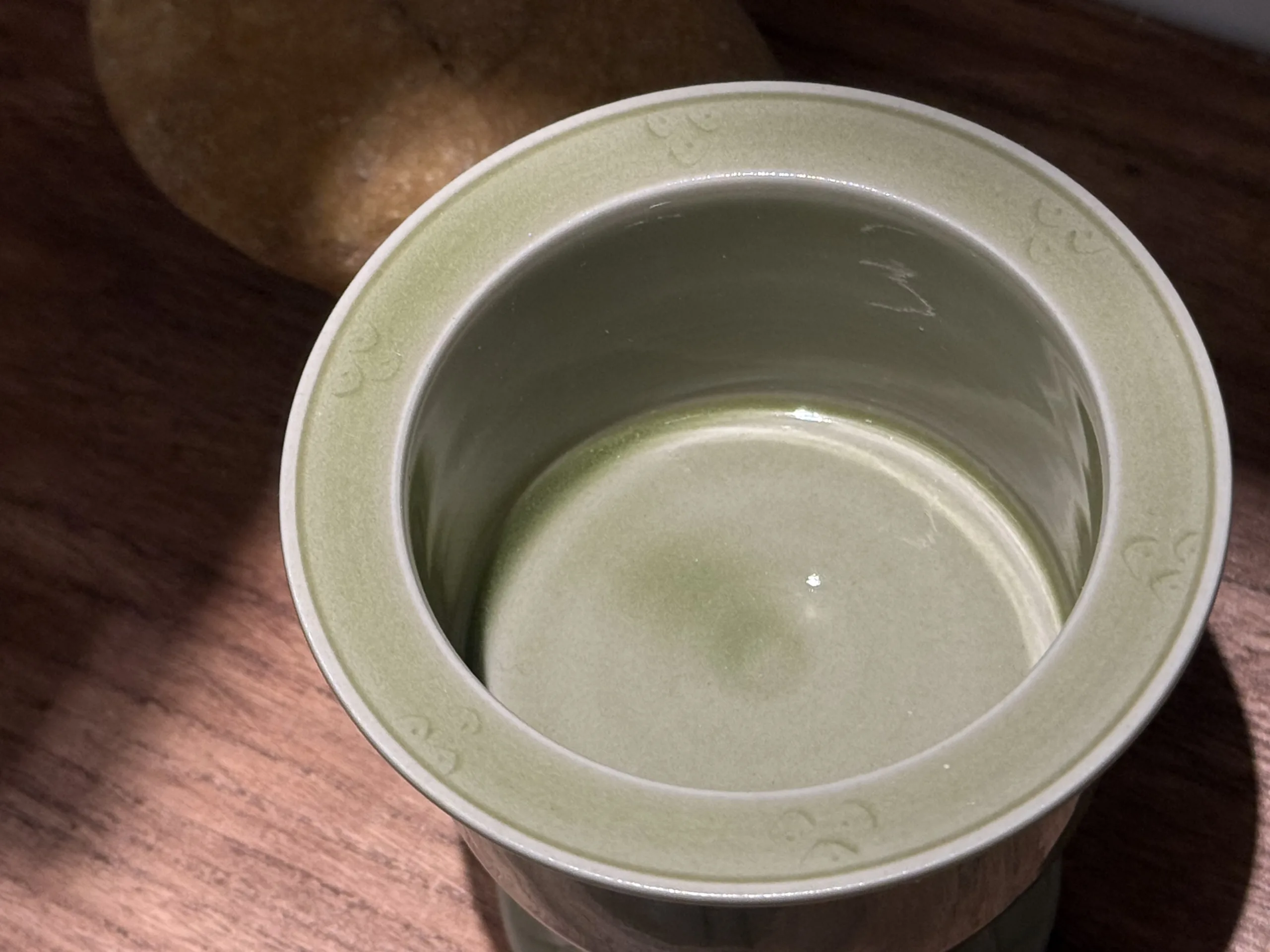
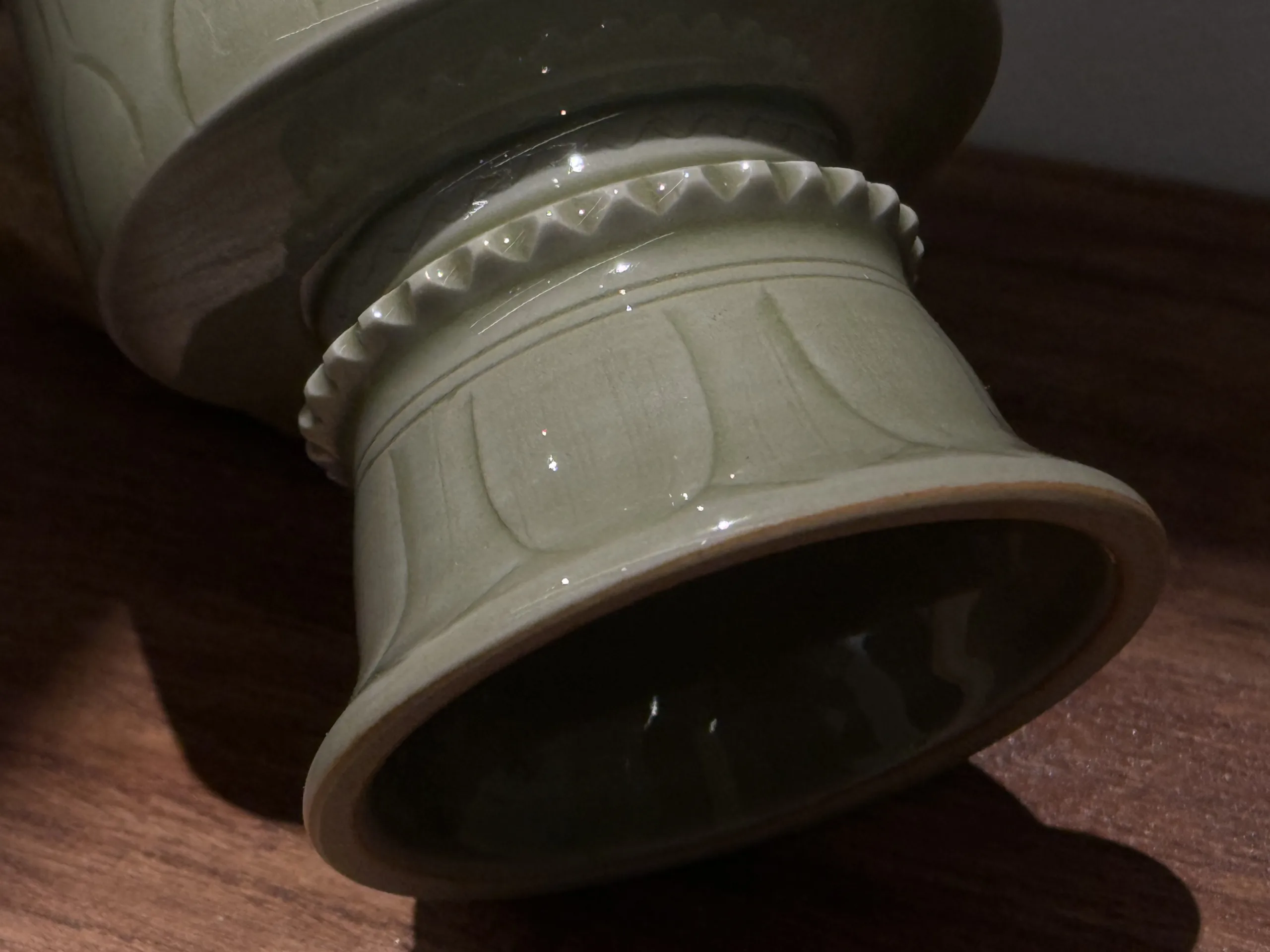
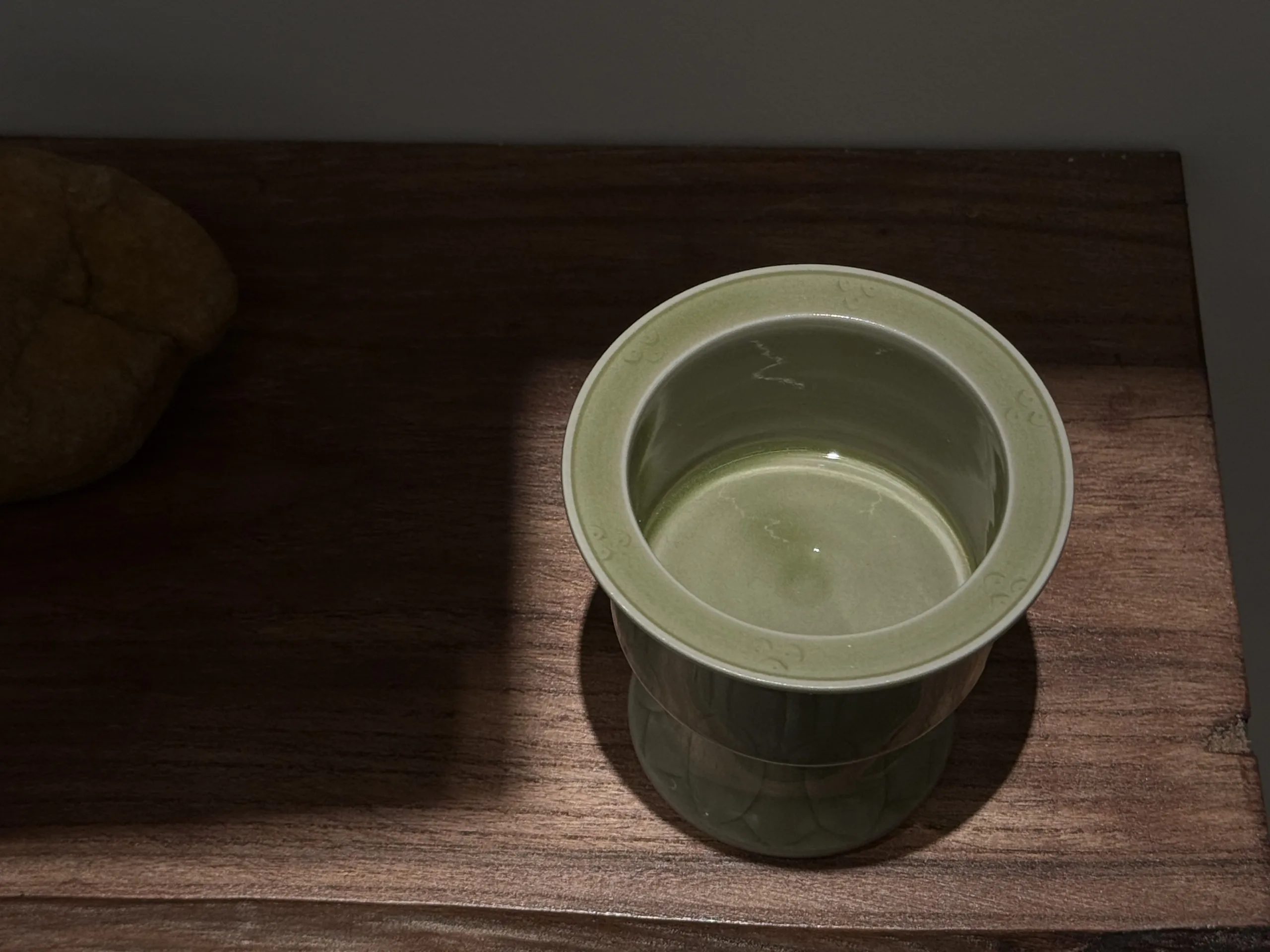
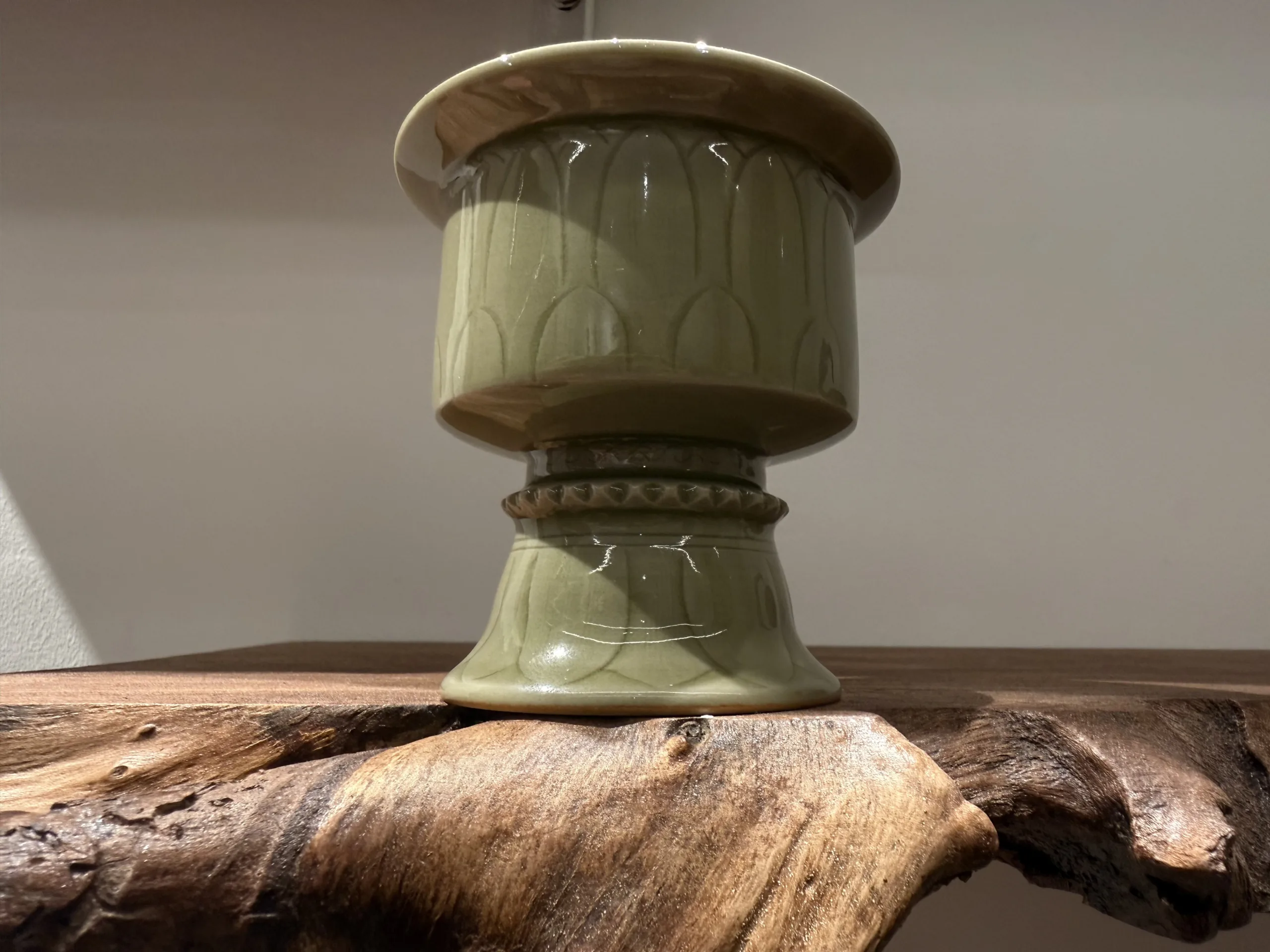
The xinglu — “traveling burner” — is a classic Longquan incense vessel. Its name comes from xingxiang, the ancient practice of carrying a censer while walking in ritual procession, offering fragrance to the Buddha. In the Song dynasty, the form moved from temple to scholar’s studio and tea table, becoming a vessel for daily incense and quiet contemplation. This piece is made in that ancient spirit — dignified yet graceful, with a tall foot and a gently flared rim.
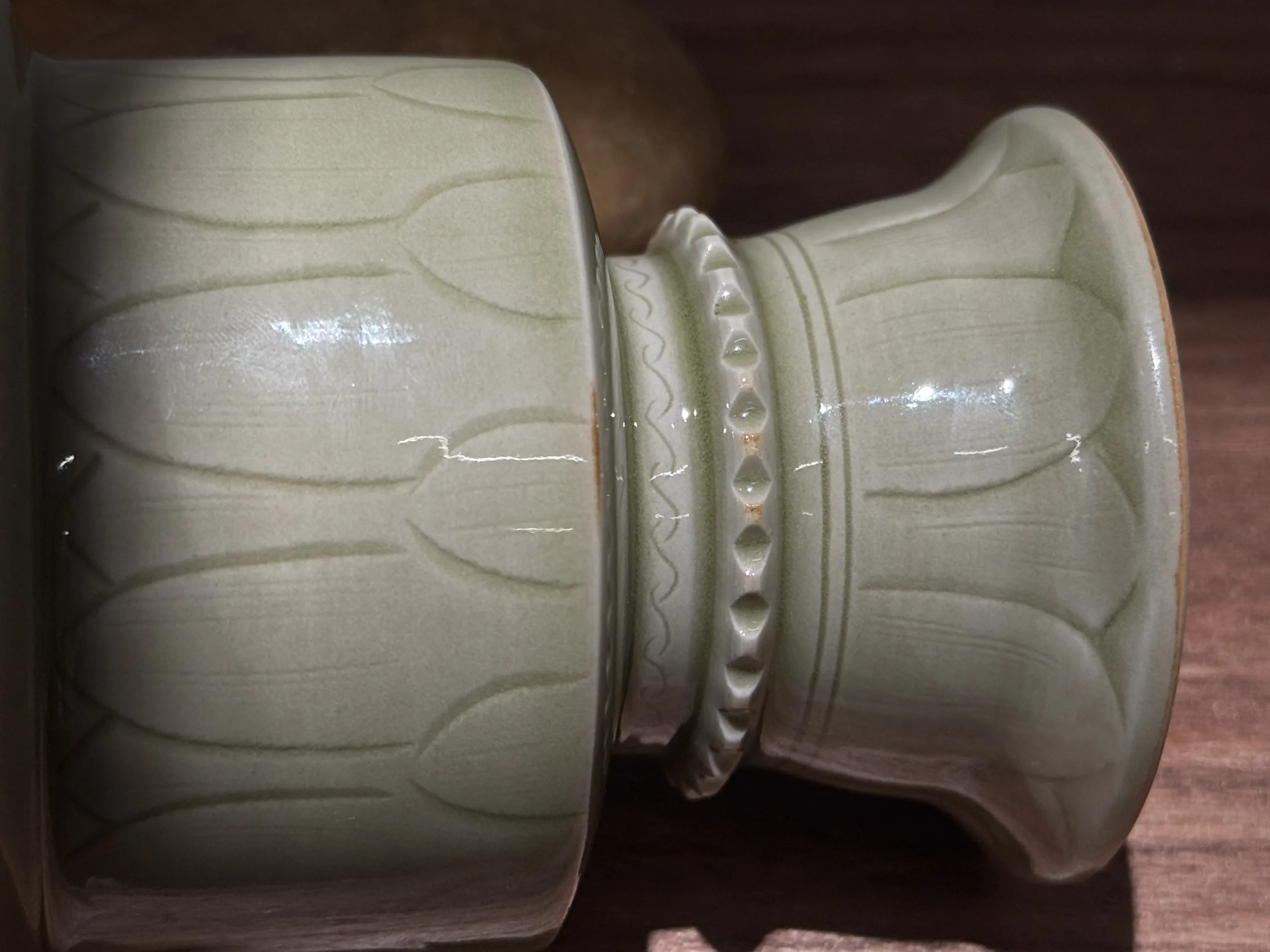
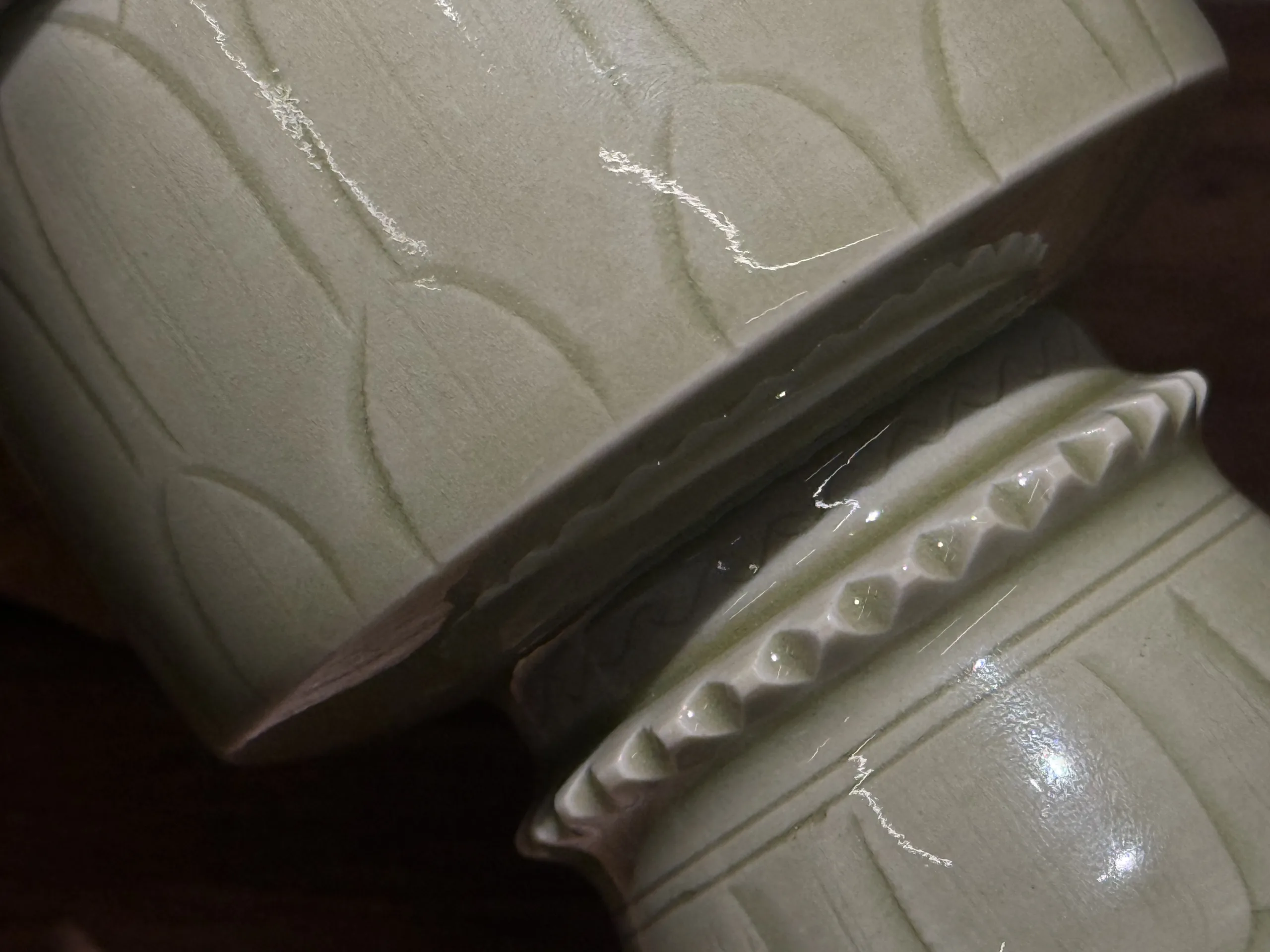
On the body, lotus petals are carved by hand — layer upon layer, tips lifted, lines flowing with quiet strength. The lotus is one of the most classic motifs in Longquan celadon, appearing on censers, vases, and bowls since the Southern Song. Rising unstained from the mud, it symbolises purity of heart and clarity of spirit. Light a stick of incense, and the smoke rises through the carved petals — as if a lotus pond breathes quietly, filling the room with stillness.
The glaze is Secret-color — a name from the Tang dynasty, when Yue kiln celadon was reserved for imperial tribute. Lu Guimeng wrote: “The autumn wind opens the Yue kiln, seizing a thousand peaks of emerald green.” The surface is pure, with no crackle, smooth as jade to the touch. Quiet and deep — not as bright as Fenqing, but carrying an ancient depth that suits the burner’s solemn grace.
Each piece is unique. Hand-thrown and hand-carved, one at a time. The lotus petals, the glaze, the form — each one slightly different. This is the mark of the maker — and the mark of a piece that exists only once.