
In the Depths of the Kiln Fire, Celadon as Ever | Lumen Naturae’s Longquan Kiln-Opening Pilgrimage
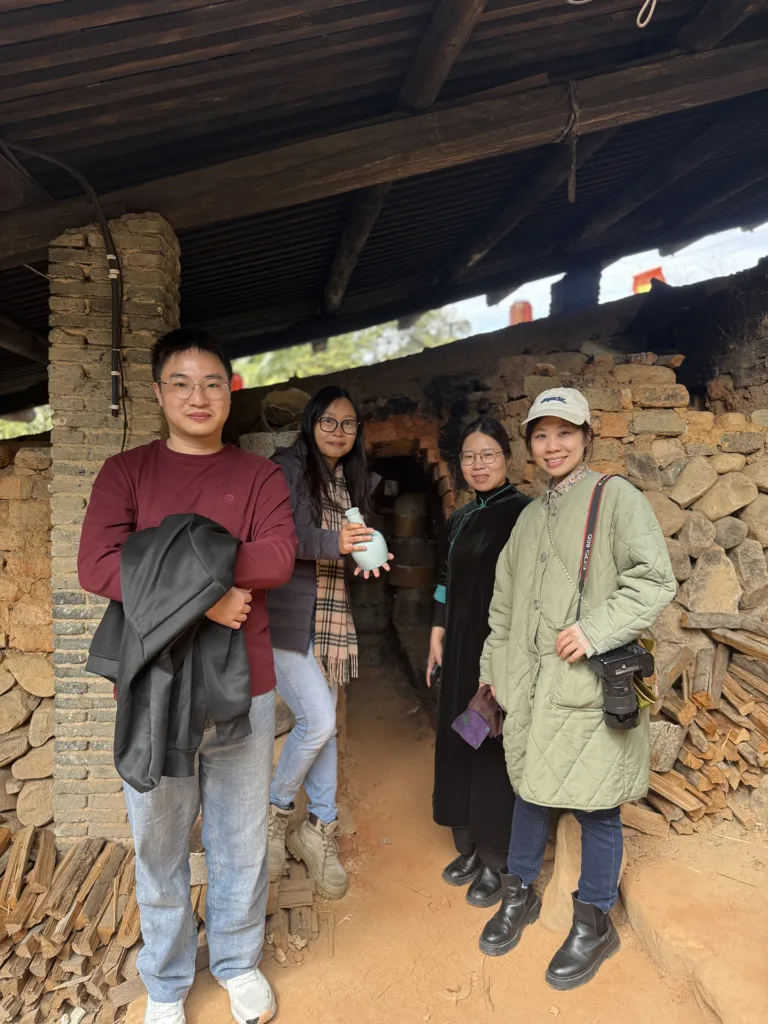
On 8 March 2026, we — the three founders of Lumen Naturae — at the kind invitation of Ms. Liao Licong, a Zhejiang provincial master of ceramic arts, answered a thousand-year call. We travelled to Xitou Village, Baoxi Township, Longquan, Zhejiang, and stepped into the famed ancient dragon kiln — Chenjia Kiln.
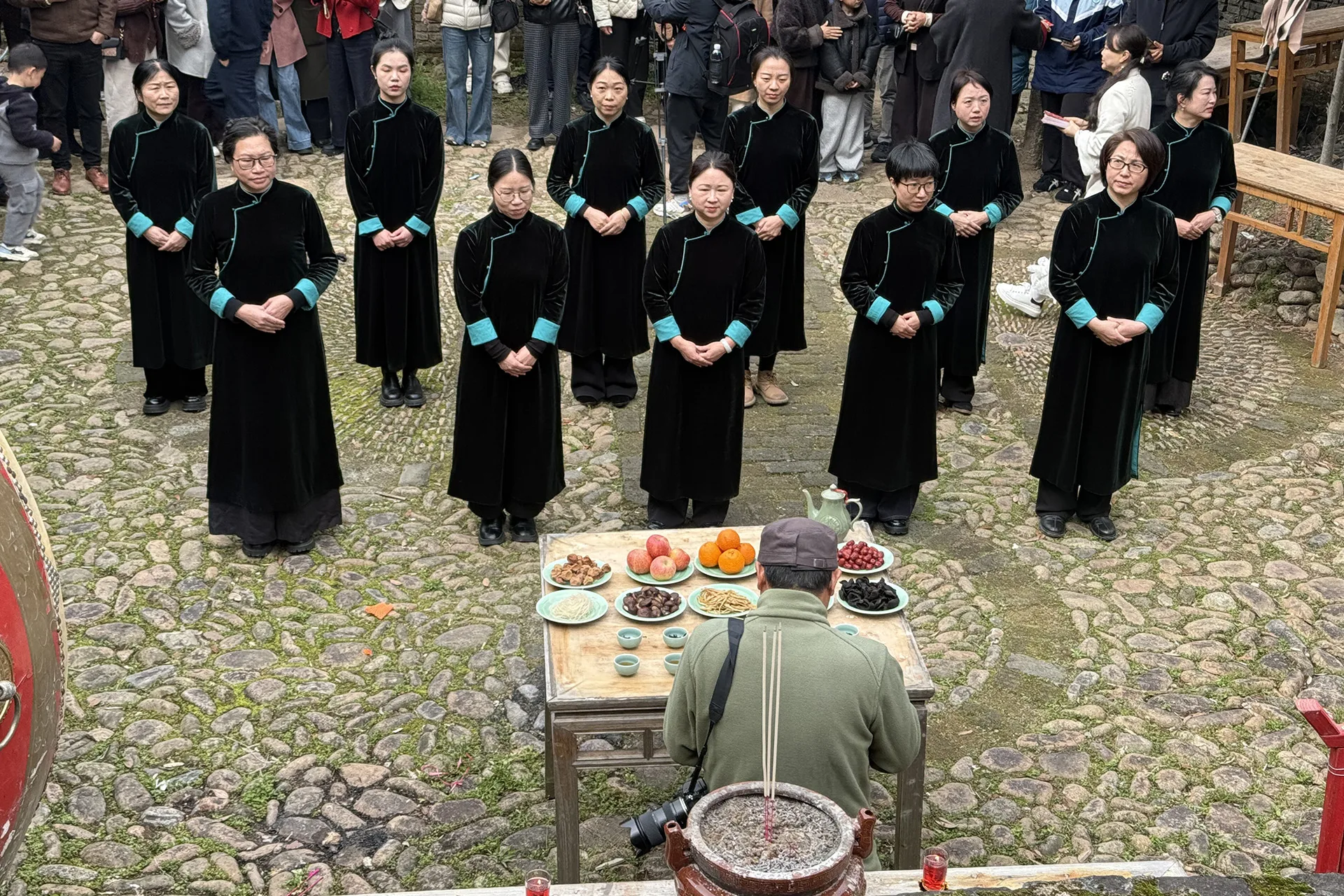
That day coincided with International Working Women’s Day. Eleven Longquan female ceramic masters were holding the “Women’s Kiln” opening ceremony. We came drawn by their renown and were privileged to witness it.
As the auspicious hour approached, the masters, dressed in traditional garments, offered wine, lit incense, and bowed deeply. Each kowtow and bow carried the devotion of a thousand-year legacy passed down through flame. The spirit of craftsmanship — silent, yet commanding deep respect.
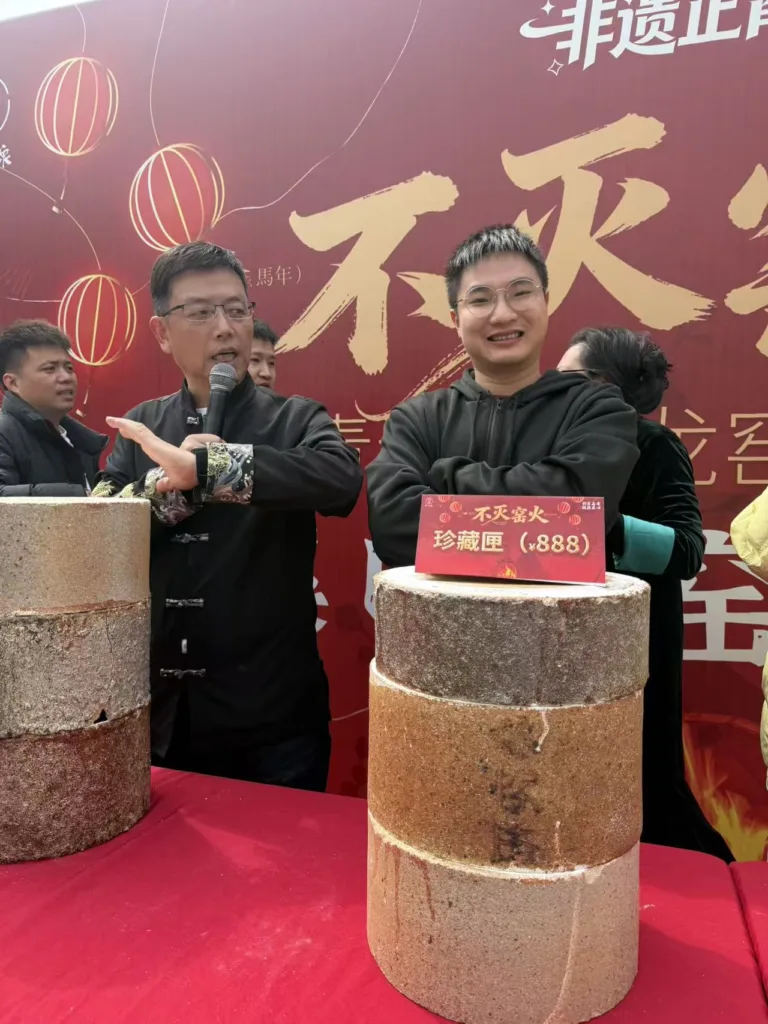
The dragon kiln opened.
Stacked xiabo (saggers) stood as dense as a battle formation — the answer the masters had entrusted to fire and clay.
The moment the saggers were opened
Some faces lit with joy, others let out soft sighs of disappointment. As each new celadon piece was revealed, no one could bear to look away. True preciousness speaks not in words, but in the silent whisper of that sky‑after‑rain blue.
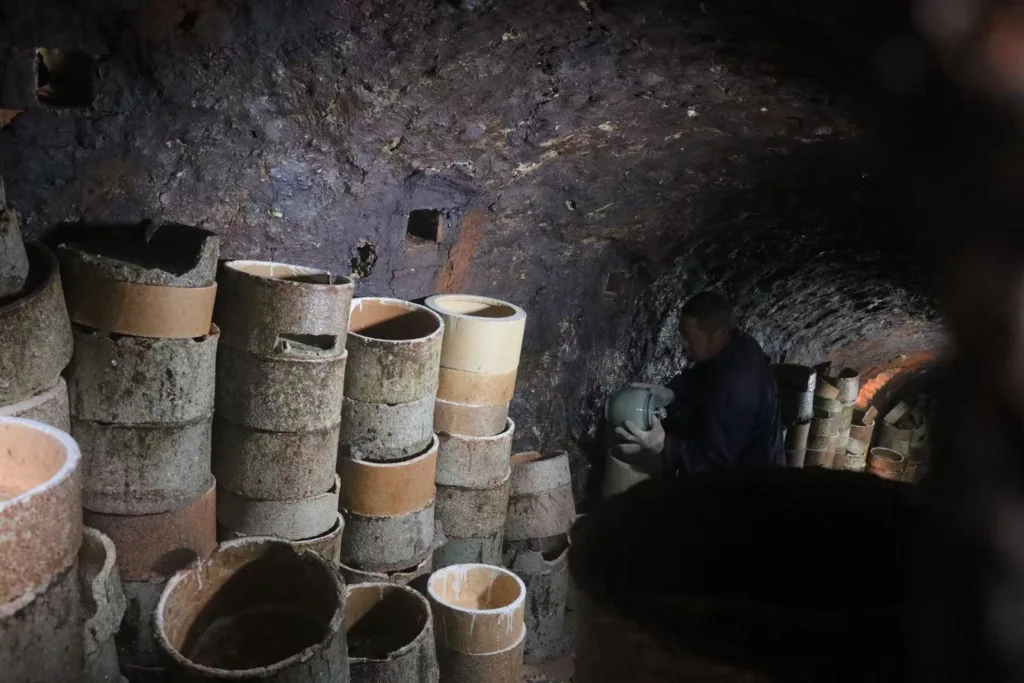
We were fortunate to take part in a blind‑box auction, bidding happily on several celadon pieces made with the craftsmen’s heartfelt dedication:
Gong Qian (Zhejiang provincial master of arts and crafts, fifth‑generation inheritor of the century‑old Zhejiang brand “Gong Sanxing”) — Phoenix Treasure Gourd, with a glossy, luminous glaze and a lively, full‑bodied form.
Zhou Qin (a seasoned Longquan celadon artisan) — Green‑glazed Horse Tea Jar, its celadon glaze gentle and refined, blending rustic simplicity with quiet fortitude.
Chen Keping (Zhejiang provincial master of arts and crafts, representative inheritor of Longquan Celadon Firing as an intangible cultural heritage of Lishui City) — Fortune on Horseback, a witty idea shaped in clay and fire, full of lively charm.
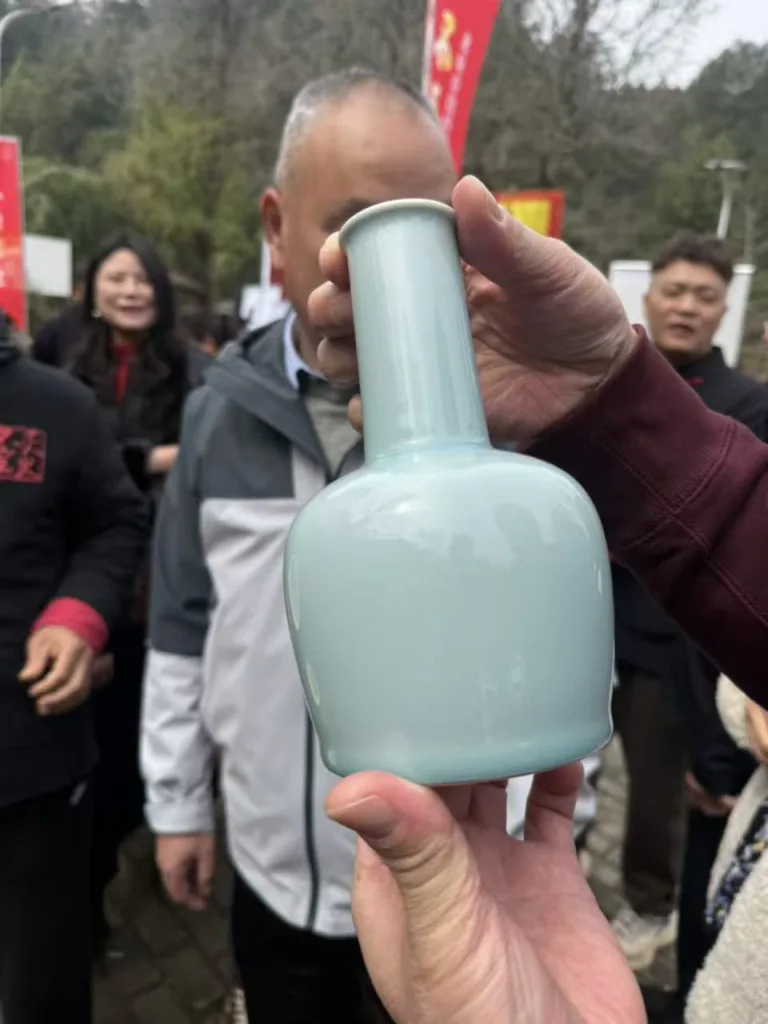
In addition, we acquired on‑site a piece by Chen Changfa (Lishui municipal master of arts and crafts, representative inheritor of Longquan dragon‑kiln firing as an intangible cultural heritage) — Fenqing Paper‑mallet Vase. A wood‑fired pale dawn green piece that achieves a blue as pure as the open sky is extremely rare. Its glaze is like the sky after rain — tranquil and crystalline. Truly, we could not bear to part with it.
The other piece is Master Liao Licong’s Soy‑sauce Glazed Incense Holder — a kiln‑transformed work. Its form is a round dish on a tall foot, belonging to the type known as a high‑foot incense holder. The glaze is bright, and when held to the light, it reveals a soft, unctuous fineness. The deep soy‑sauce colour, created by kiln transformation, is as profound as aged soy — still yet filled with a thousand hidden variations. Equally marvellous.
On this journey to Longquan, we witnessed how a thousand years of kiln fire continue in the hands of today’s craftspeople — and saw, in that sky‑after‑rain blue of the celadon, the silent strength it carries.
Lumen Naturae – reflecting the world through objects. We gladly share with you this beauty born from the depths of the kiln fire.