
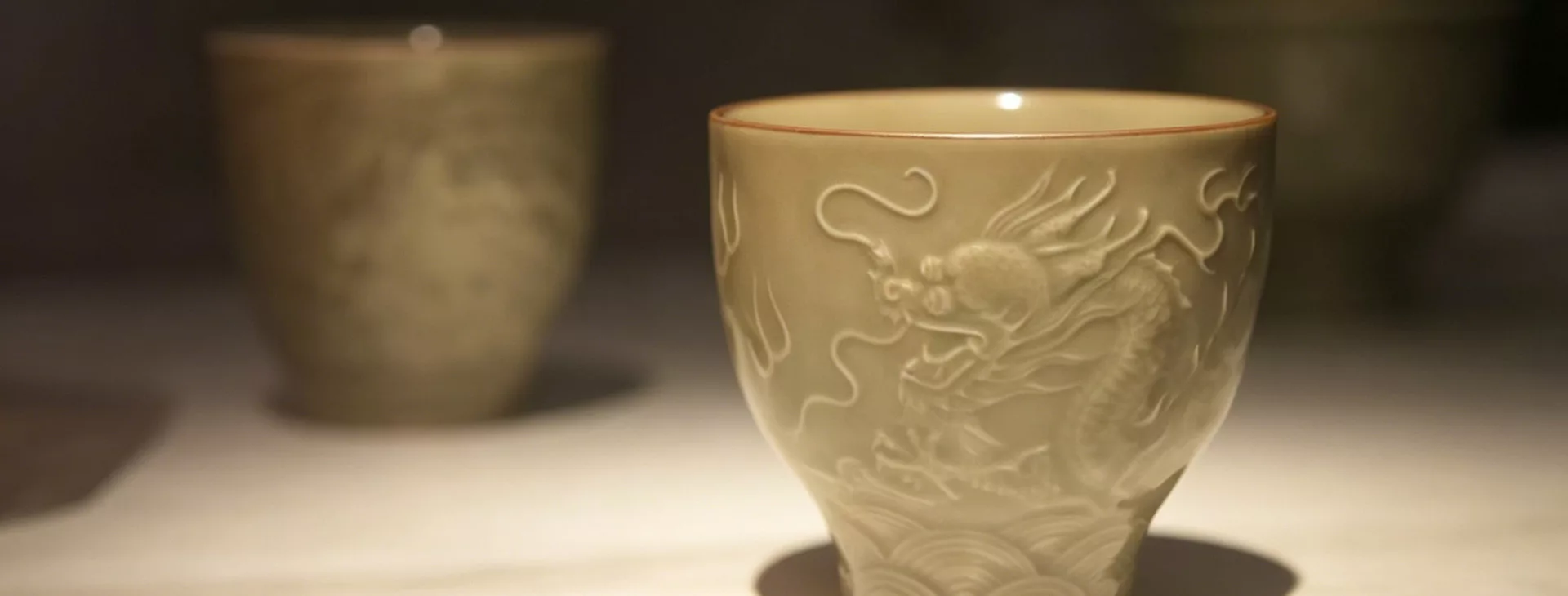
There are ceramics, and then there is celadon.
5th-Generation Inheritor of Zhang Family
Longquan Celadon Master of Chinese Arts and Crafts Industry
For centuries, the kilns of Longquan have sent their work across mountains and seas — to emperors who displayed it in forbidden cities, to monks who carried it to distant temples, to merchants who traded it for silk and silver and spice.
Today, the flame still burns. And what comes from it is the same as it ever was: quiet, green, and true.
What is Longquan Celadon?
It begins in the hills of southwest Zhejiang, where the earth holds two kinds of clay — porcelain stone and purple-gold soil — that are found nowhere else in quite the same way. Dug by hand, refined by water, shaped on the wheel, carved with patience, dried in shadow, glazed in secrecy, fired in dragons.
The dragons are kilns, long and low, built into the slope of a mountain. They breathe fire for days, fed with pine, until the flames have done their work and the kiln cools — slowly, for the clay must never be rushed.
What emerges is green. Not one green, but many.
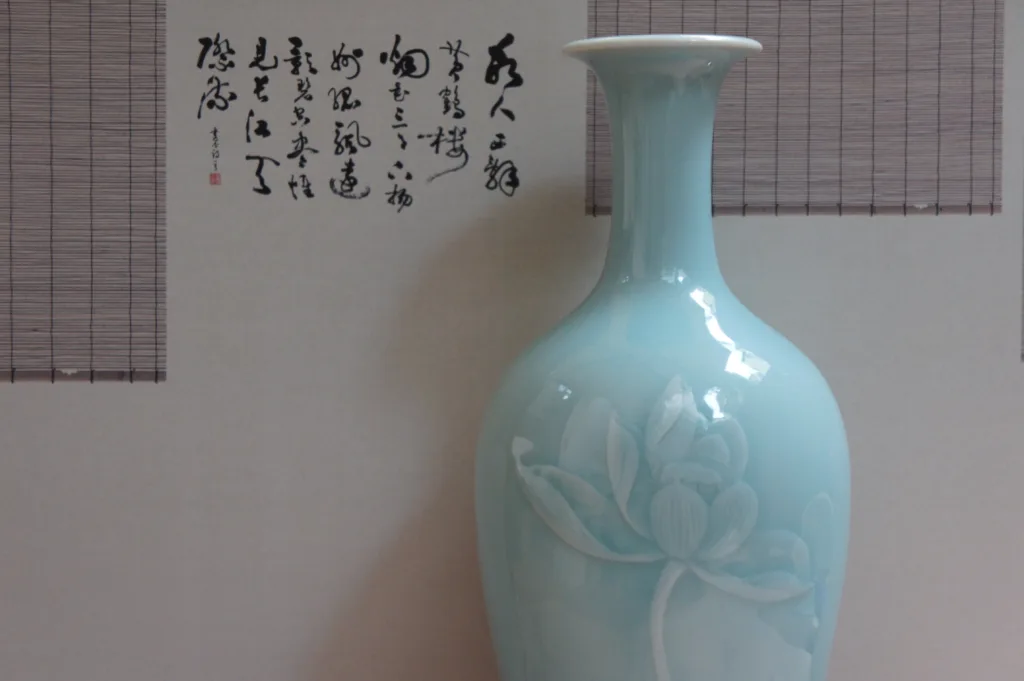
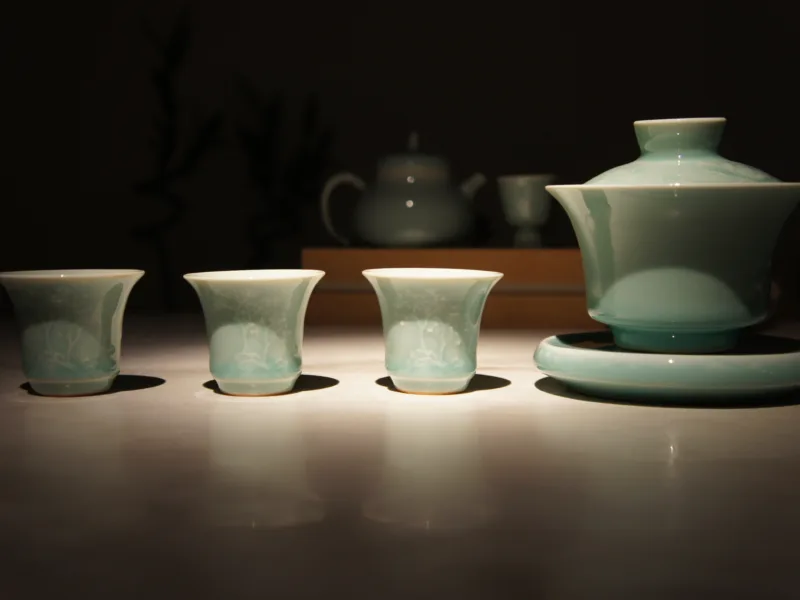
Pale Dawn green (fenqing) — thick and soft as jade, pale as mist over rice fields. The colour of early morning, before the sun burns through.
Plum green (meiziqing) — clear and deep, like young plums on the branch, holding light the way water holds the sky.
These are the two that made Longquan famous. But every firing is different. The flame moves as it wishes, and the glaze answers.
The Art of It
The Chinese say: The great way is simple.
Celadon does not shout. It does not need gold leaf or painted dragons. It trusts the green — the green of mountains, of rivers, of bamboo after rain — to say everything that needs saying.
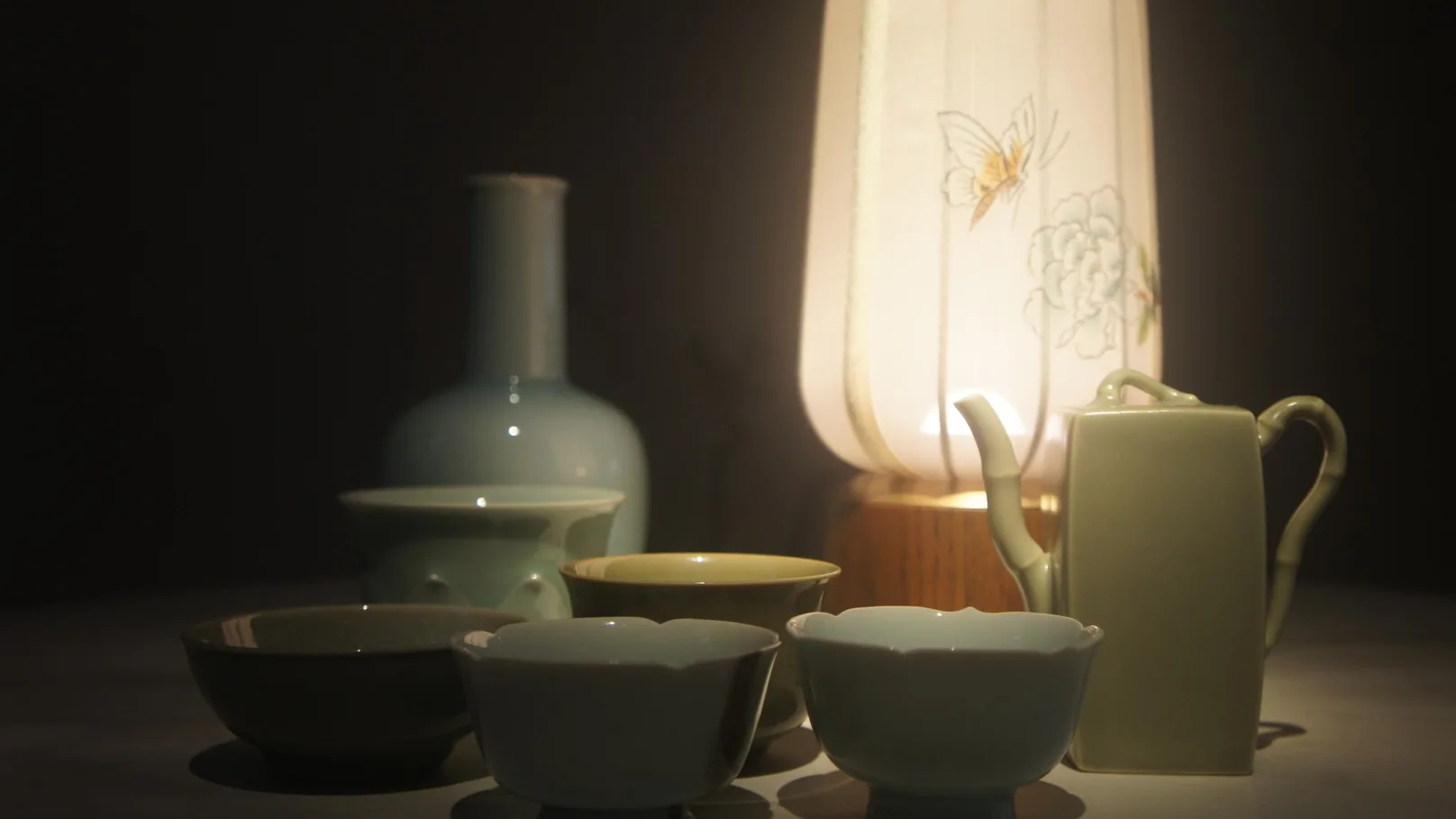
The shapes are quiet too. A bowl like a lotus leaf. A vase with ears like phoenix wings. A cup that fits the hand as if it grew there. Nothing extra. Nothing for show.
Sometimes the glaze cracks — fine lines spreading like ice on a frozen lake. This is not a flaw. It is the clay remembering the fire, the fire remembering the cold. Each crack is a signature, written once and never repeated.
From China to the World
By the Song and Yuan dynasties, Longquan celadon had already left home.
It sailed the maritime silk road in the holds of trading ships, bound for palaces in Istanbul, temples in Kyoto, markets in Cairo. In the ruins of old Fostat, archaeologists found more celadon than anywhere outside China. The Ottomans filled the Topkapi Palace with it. The Japanese learned from it, then made their own.
Wherever it went, it carried something of China with it — not the China of emperors and edicts, but the China of quiet mornings and slow afternoons, of tea drunk in good company, of beauty that asks nothing but to be seen.
Today
The old kilns are still working. The old families are still making.
But celadon is no longer just for museums. It sits on modern tables, holds flowers in city apartments, pours tea for people who have never heard of the Song dynasty but know, when they hold it, that this is something true.
The young makers learn from the old — not to copy, but to carry. They shape the same clay, fire in the same dragons, reach for the same green. And sometimes, when the kiln opens and the light falls just right, they catch it again: the colour that has travelled a thousand years to meet them.
To Close
Longquan celadon is clay and fire, yes. But it is also time, and patience, and the quietest kind of skill.
It does not speak. But in its green you can hear the mountains. In its cracks you can read the fire. In its weight you can feel the centuries.
If porcelain is the language China gave the world, then Longquan celadon is its clearest word — the one that needs no translation, the one everyone understands.
A single jar of green holds a thousand peaks.
A single cup of celadon holds a thousand years.
Related Products

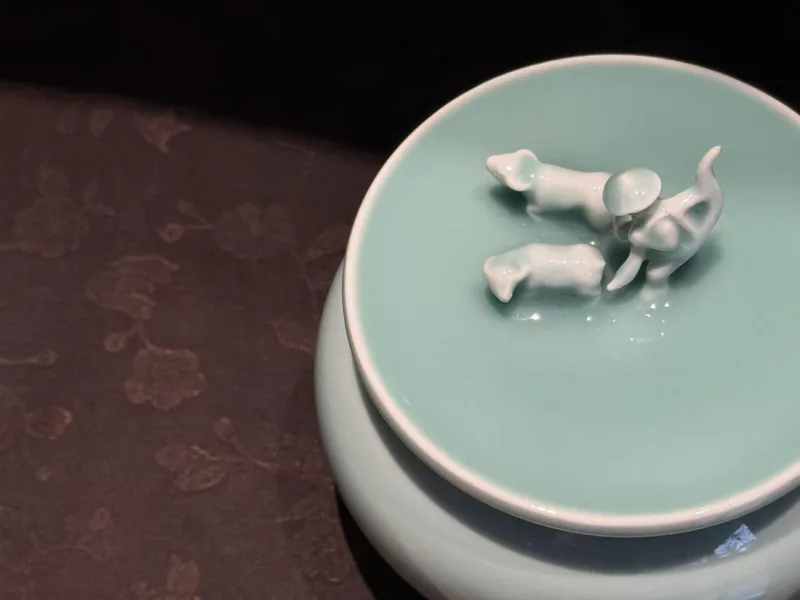 Longquan Celadon · Field Herdsman Tea Canister
There is celadon, and then there is celadon that carries a field at dusk.
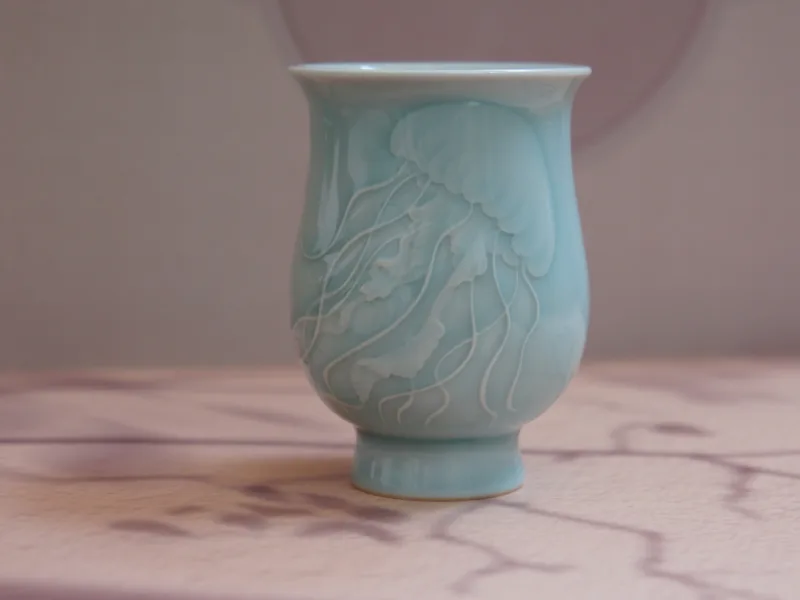 Longquan Celadon Jellyfish Tulip Cup
There is celadon, and then there is celadon that carries an ocean.