
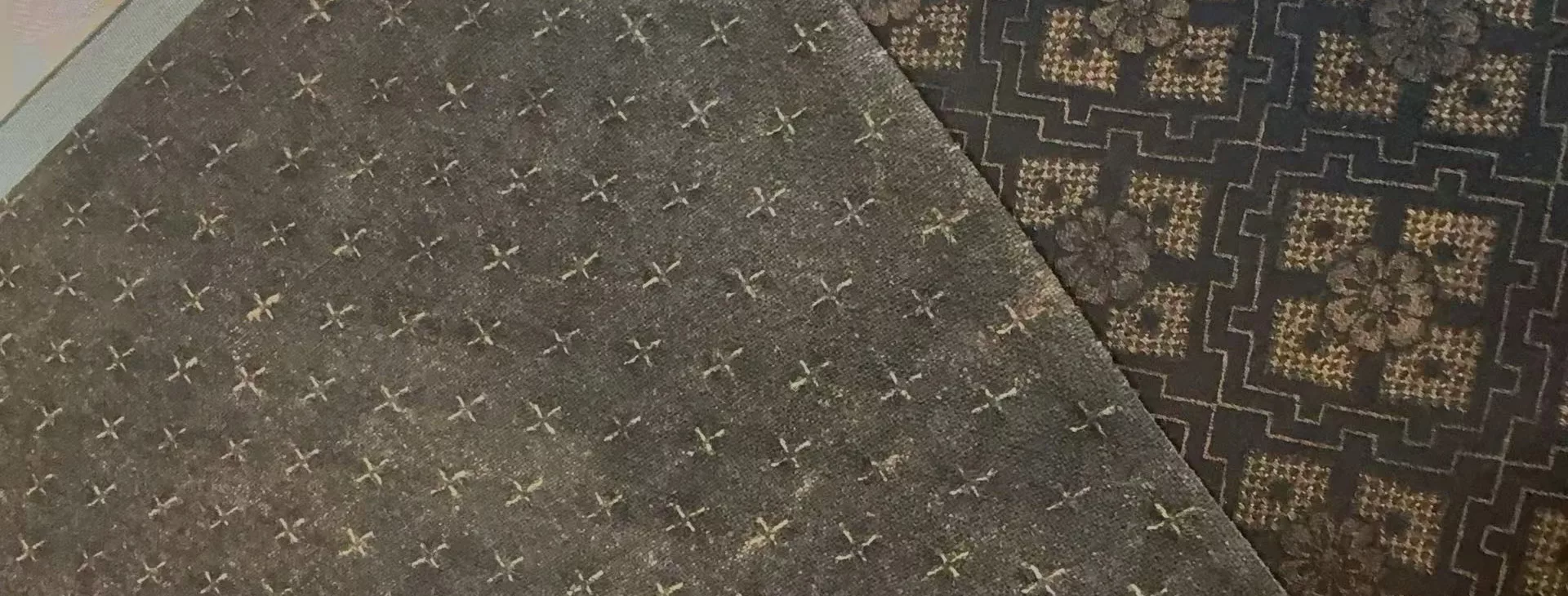
There are silks that shine, and then there is this one — that does not shine, exactly, but holds light the way river mud holds the memory of sun.
They call it xiangyunsha. Cloud silk. Fragrant cloud silk. The name comes from the sound it makes when you move — a soft whisper, like wind through reeds, like silk brushing silk. The old name was xiangyunsha — “sound-cloud silk” — and later it became xiangyunsha, the characters changing but the whisper staying.
In the West, they call it “liquid gold.” Not because it is yellow, but because it is rare, and because the making of it takes something that cannot be replaced: time, patience, and a particular kind of knowing that lives only in the hands.
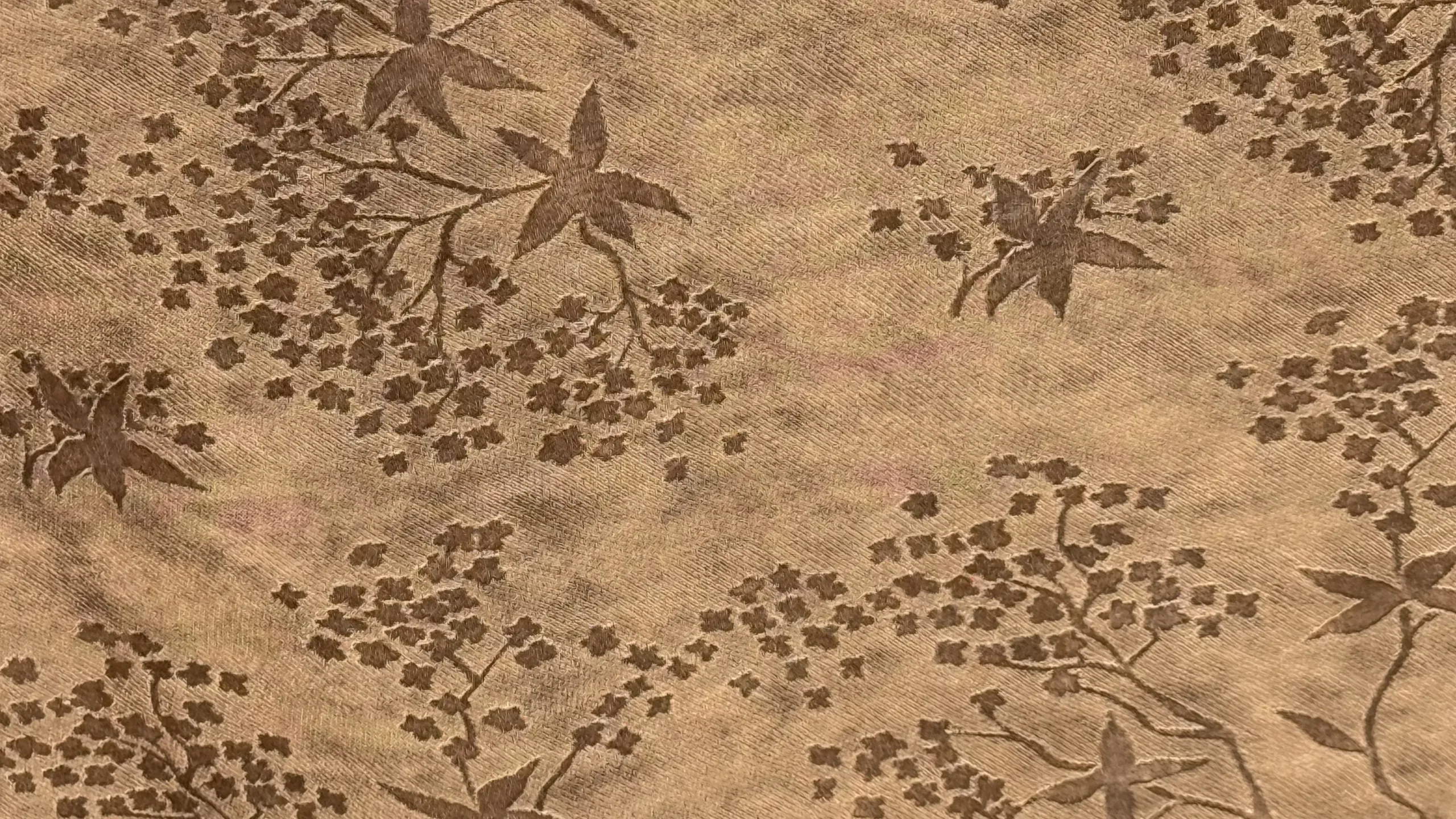
What is Xiangyunsha?
It begins simply: silk, woven plain, waiting.
Then the dyeing starts. Not with chemicals, not with synthetic colours, but with the root of a wild vine called shuliang that grows in the hills of Lingnan. The root is crushed, soaked, boiled until the water runs the colour of rust and earth.
The silk goes in. Comes out. Dries in the sun. Goes in again. Again. Again.
Thirty times, sometimes more. Each dip adding another layer, another memory, until the cloth has drunk so much of the root that it has become something else entirely.
But this is only half the story.
The other half happens at night, in the dark before dawn, when the river mud is still cool. Mud from the Pearl River delta, rich with iron, carried by hand to the dyeing fields. Spread on the silk in a thin, even layer. Left to work its slow chemistry — the iron meeting the tannin from the root, turning the surface black, sealing the colour inside.
Then washing. Then drying again. Then softly, gently, the mud is washed away, and underneath is the deepest, richest black — oiled, gleaming, alive.
The other side stays brown. Two faces, one cloth.
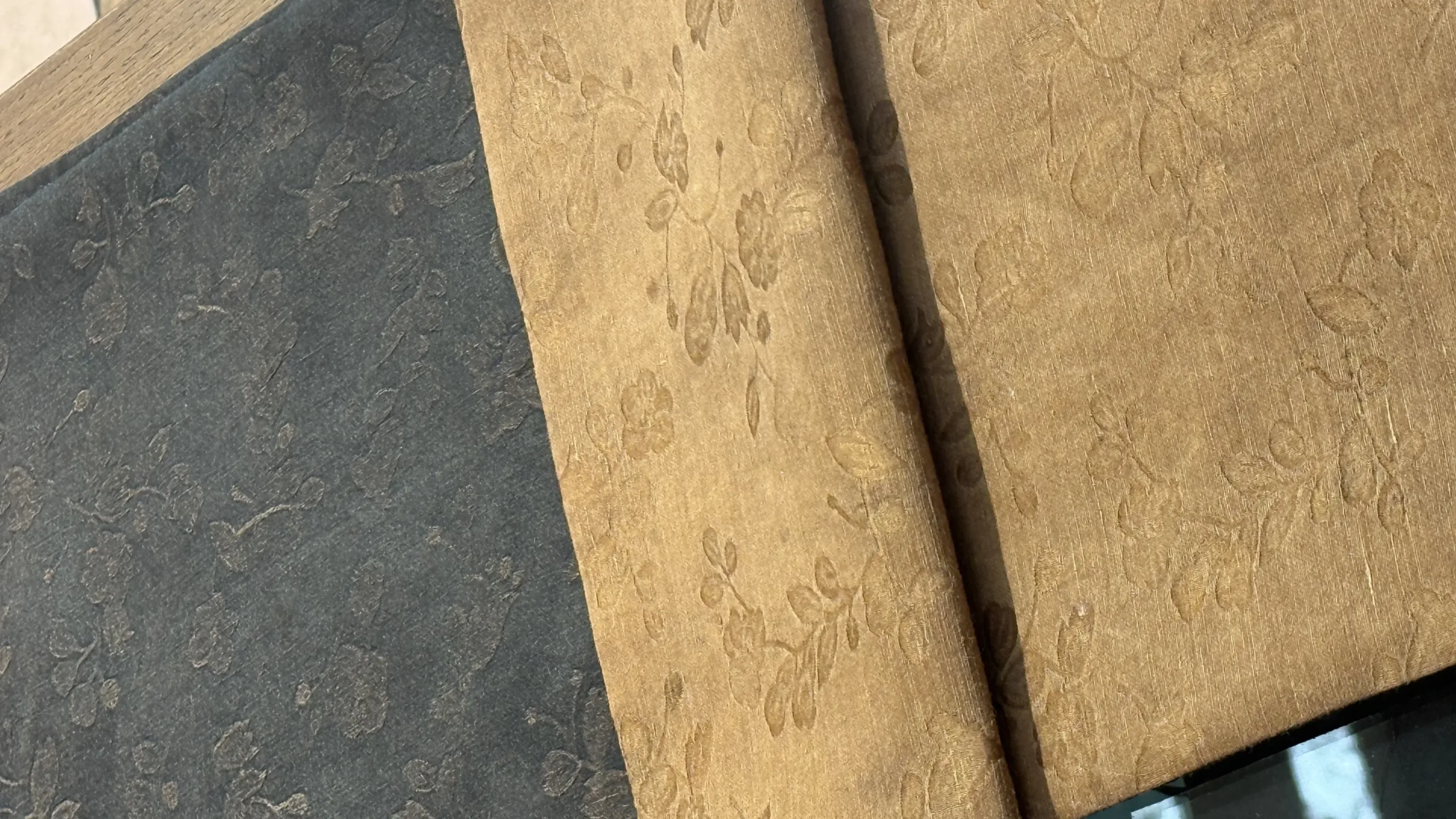
The Making
The Cantonese say: Three washes, nine steamings, eighteen sunnings.
It is not a recipe. It is a reminder: this takes time.
The work happens only in summer and early autumn, when the sun is strong and the air is dry. The cloth must be spread on grass, not concrete — grass breathes, grass holds moisture just so, grass lets the silk rest as it works.
A man walks the fields, sprinkling shuliang juice from a bamboo ladle, his shadow moving across the cloth. A woman watches the sky, ready to turn the silk before the light shifts. Another waits by the river, feeling the mud with her fingers, knowing when it is right.
No one writes this down. No one could.
The Character
Wear it once, and it is stiff. Wear it ten times, and it softens. Wear it a hundred times, and it becomes a second skin — remembering your shape, your warmth, your way of moving.
It breathes. In heat, it stays cool. In damp, it stays dry. It does not cling to dust, does not wrinkle easily, does not shout for attention.
The colour is quiet. Black, brown, deep russet. The kind of colours that take time to see, that reveal themselves slowly, that do not give everything at once.
This is not silk for palaces. This is silk for people who move through the world and want to move through it lightly — merchants, scholars, travellers, those who know that real luxury is not in showing, but in being.
The History
No one knows exactly when it began. Sometime in the late Ming, early Qing — three, four hundred years ago — in the network of rivers and canals that web the Pearl River delta. Shunde, Nanhai, Panyu. Villages where everyone knew someone who knew someone who could make it.
By the 1920s and 30s, it was famous. Merchants carried it south to Southeast Asia, where the heat and humidity made it the only cloth that made sense. Women in Singapore wore it. Men in Bangkok. Anyone who could afford it, anyone who knew.
Then the war came. Then the factories. Then the chemicals. For a while, it nearly disappeared.
But not quite. Someone always remembered. Someone always kept the mud wet and the root drying and the knowledge passing, hand to hand, mother to daughter, master to apprentice.
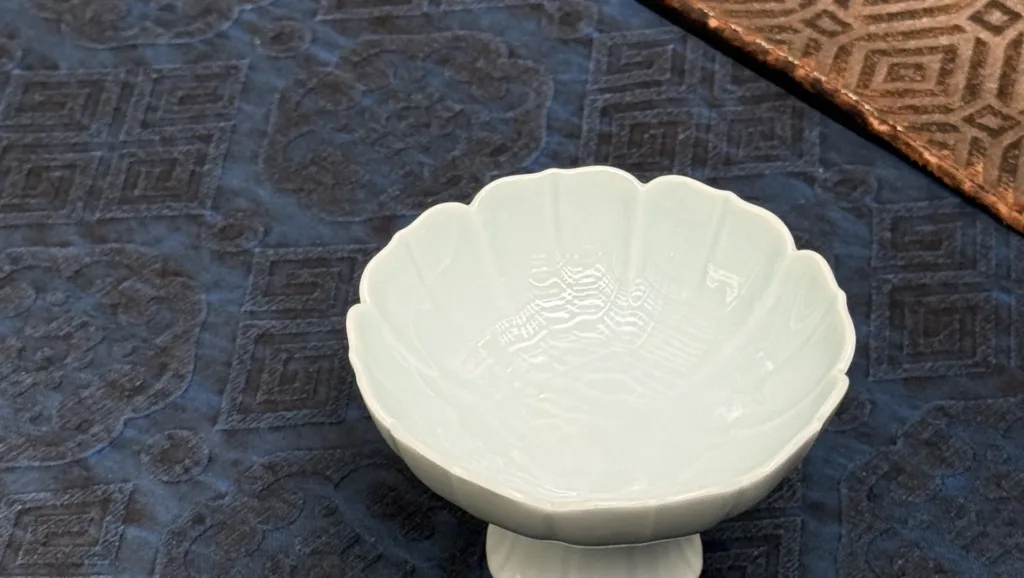
Today
The old ones are still working. The young ones are learning again.
There are brands that have taken xiangyunsha out of the village and into the world. Clothes for people who have never seen a Pearl River mudflat but know, when they touch this cloth, that it comes from somewhere real.
There is a museum now, in Shunde, where you can walk the dyeing fields and watch the work and understand, slowly, what it means to make something this way.
And there are still nights, before dawn, when the mud is spread and the silk waits and the makers move through the dark, doing what has always been done.
To Close
Xiangyunsha is cloth, yes. But it is also a record — of sun and river, of root and mud, of hands that knew when to wait and when to move.
It is the deepest, quietest kind of beauty. The kind that does not announce itself. The kind you discover over time, by wearing, by touching, by living with it.
If silk is China’s gift to the world, then xiangyunsha is the chapter written in the language of earth and water — the one you have to sit with, slowly, to understand.