Nestled deep within the mist-shrouded mountains of southwestern Hubei, China, in the folds of the Wuling Range, lies Enshi Xianfeng—a land where the Tujia and Miao people have lived in harmony with nature for generations. Here, wood is more than just a material; it is a living chronicle, carrying the breath of the forest and the soul of an entire culture. This is the essence of Xianfeng Woodcarving, an intangible cultural heritage that intricately weaves together human artistry and the raw, untouched beauty of nature.
Our story begins with a dialogue between people and trees, rooted deeply in time. For centuries, local artisans have gazed upon the forest with reverence, seeing life and character in every gnarled root, twisted branch, and natural burl. These organic forms were thoughtfully transformed into objects of daily poetry: hooks by the hearth, stands for wild mountain flowers, or staffs that remembered the contours of the hills. Touched only by skilled hands and simple tools, the wood retained its own voice—a testament to a philosophy where utility and beauty exist as one.
Layers of history have enriched this tradition. The construction of the Tusi City during the Ming Dynasty brought master carvers from the Jiangnan region, whose refined techniques gracefully merged with the bold, expressive local style. This fusion gave birth to a unique craft: robust yet delicate, where openwork allows light to dance, and each carved mark feels both spontaneous and deeply intentional. The chisel’s touch follows the natural grain of the wood, allowing the material to speak for itself.
At its heart, Xianfeng Woodcarving speaks a harmonious visual language. Its motifs draw from daily life—hunting, farming, festive dances—and from timeless symbols: the protective White Tiger (a Tujia totem), rolling mountains, blooming peonies, and tales of ancestors. Patterns like the sun-worshipping swastika (“卍”) or the persevering “carp leaping through the dragon gate” carry wishes for goodwill and aspiration. Each piece is a quiet meditation on balance—between earth and spirit, tradition and life.
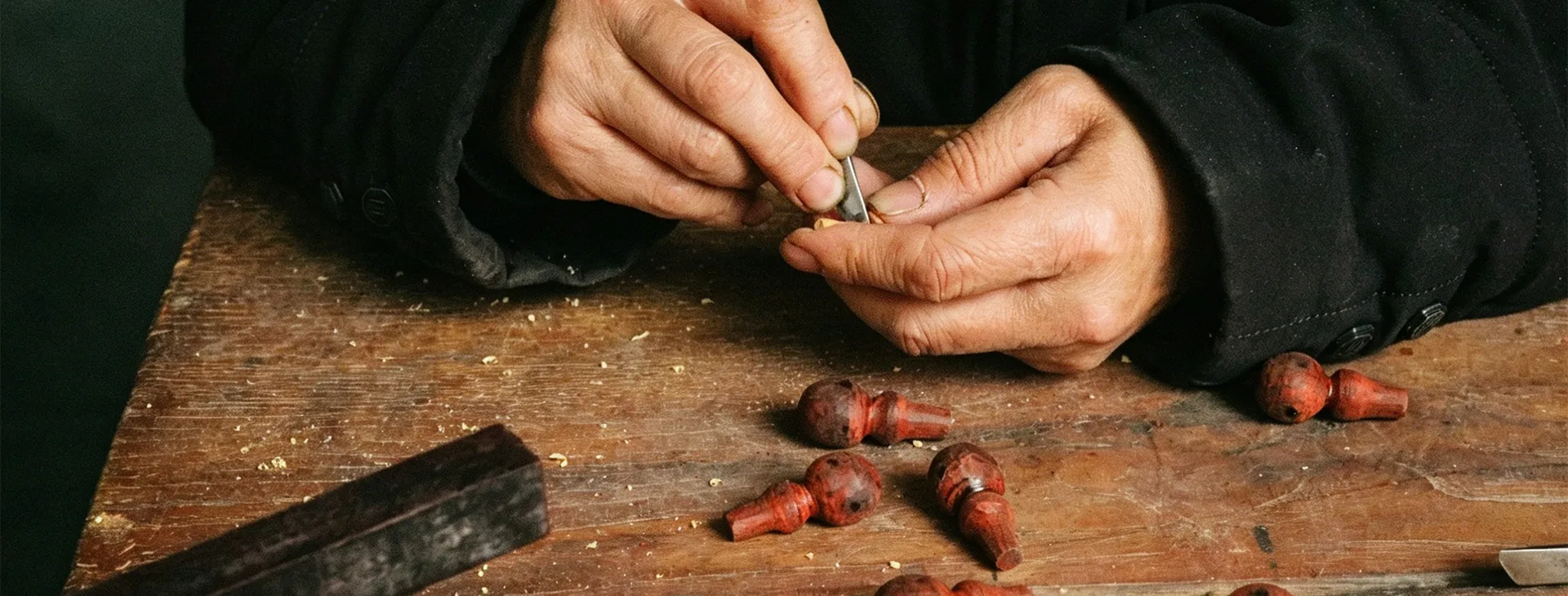
Today, this heritage lives on through dedicated inheritors like Master Li Yongqiang, a provincial-level intangible cultural heritage bearer. Deeply rooted in tradition, Master Li employs ancient techniques such as hollow carving, deep and shallow relief, and circular engraving, yet he lets the wood itself guide his hand. Within the long scroll of Xianfeng Woodcarving, his works resonate like a duet between mountain and timber. His creations never stray from the roots of life—wood sourced from nature returns to daily existence, enriched with story and meaning.
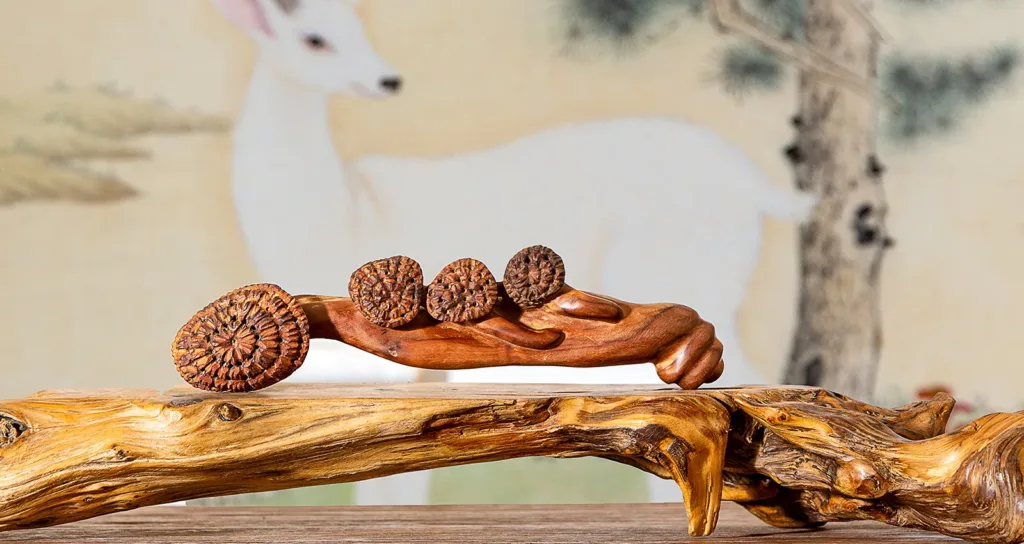
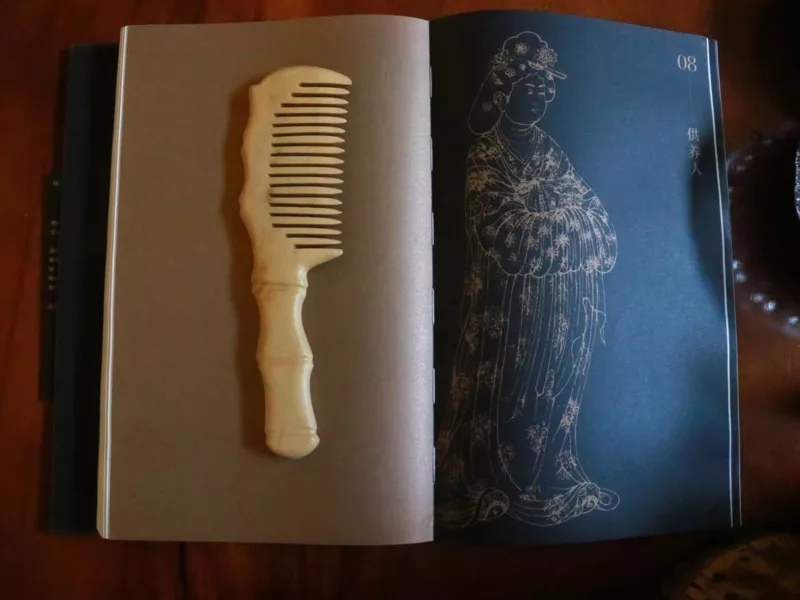
His classic piece, “Boxwood Lingzhi”, is more than a decorative object; it is an accessible embodiment of Eastern living wisdom. The warm, smooth texture of boxwood is carved into the form of a lingzhi mushroom, its rounded, full lines serving both as a practical tool for soothing the neck and shoulders and as a vessel for the auspicious “ruyi” (as-you-wish) symbolism, reminiscent of benevolent clouds. It can rest peacefully on a desk, adding an aura of serenity and good fortune to a space, or be placed among forest greenery, where its naturalistic form blends seamlessly with the wilderness. Holding it in hand, its pale yellow, silky surface seems to calm the spirit, bringing a deep sense of peace.
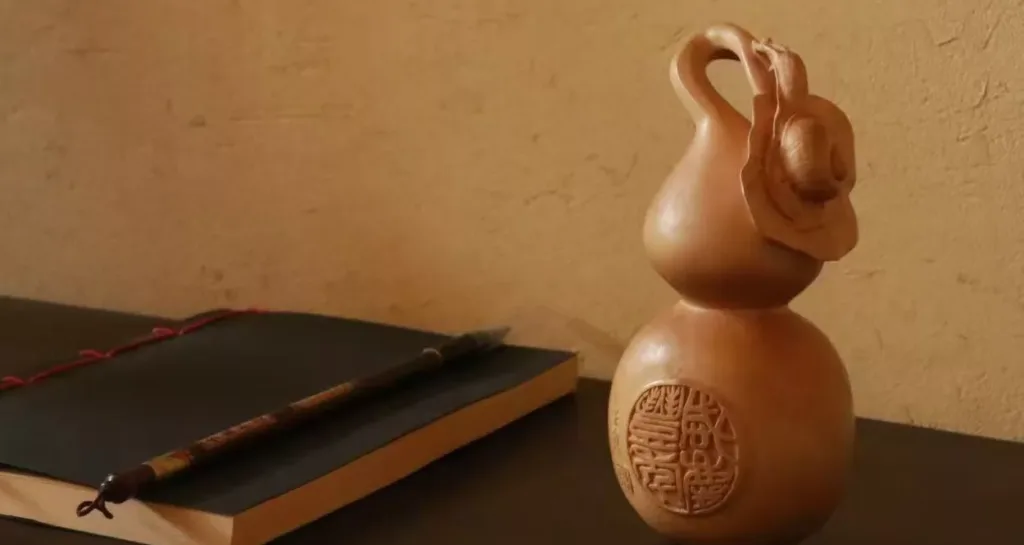
Another work, “Bountiful Year · Boxwood Gourd”, is imbued with simple wishes for safety and abundance. The gourd’s plump, rounded form, polished to a jade-like sheen, is pleasing to the eye and heart, offering a sense of guardianship and blessing wherever it rests.
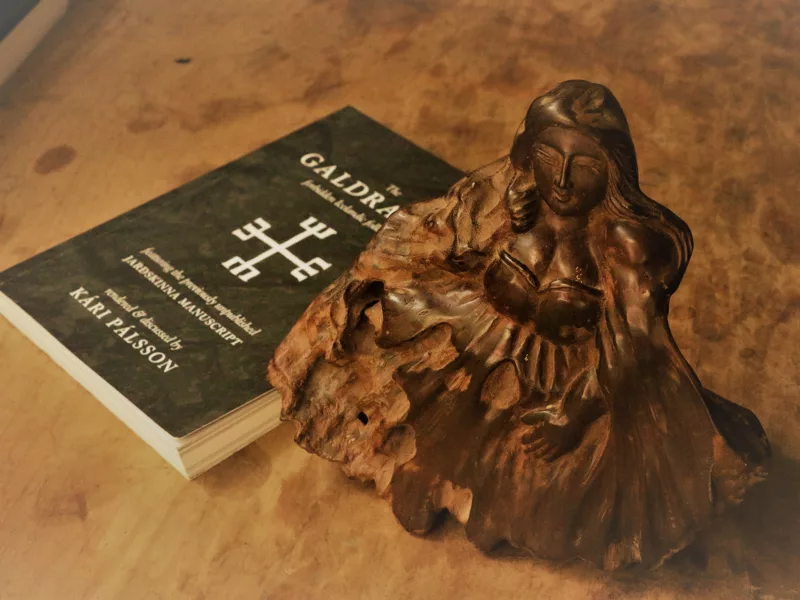
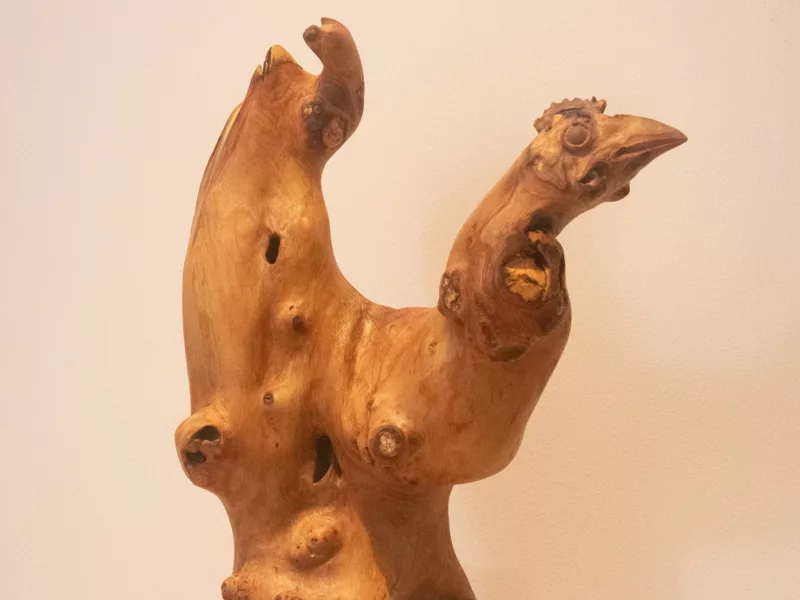
Whether capturing the spirit of historical figures like “Qu Yuan”, the lively charm of mountain creatures in “Pheasant” or “Wooden Fish Basket”, the elegance of daily life in “Maidservant” or “Lucky Bag”, or the free spirit of nature in “Seabird”—every piece, large or small, is a crystallization of Master Li’s search for inspiration in nature, history, and life itself. He regards the wood’s innate character as the primary language of creation, allowing his blade to follow its grain and texture, so that each finished work appears to have “grown naturally from the wood.”
His creations carry an organic essence, as if born from the forest itself, conveying the soul of Xianfeng’s mountains and woods to audiences across China and the world. Through his teaching and artistic practice, Master Li bridges past and future, ensuring that this timeless dialogue between wood and humanity never fades.
Xianfeng Woodcarving is more than decoration. It is poetry flowing through timber, a legend shaped by mountain winds and skilled hands. We invite you to explore this living art—where every grain tells a story, and every carving is a quiet ode to the serene wisdom of nature.