
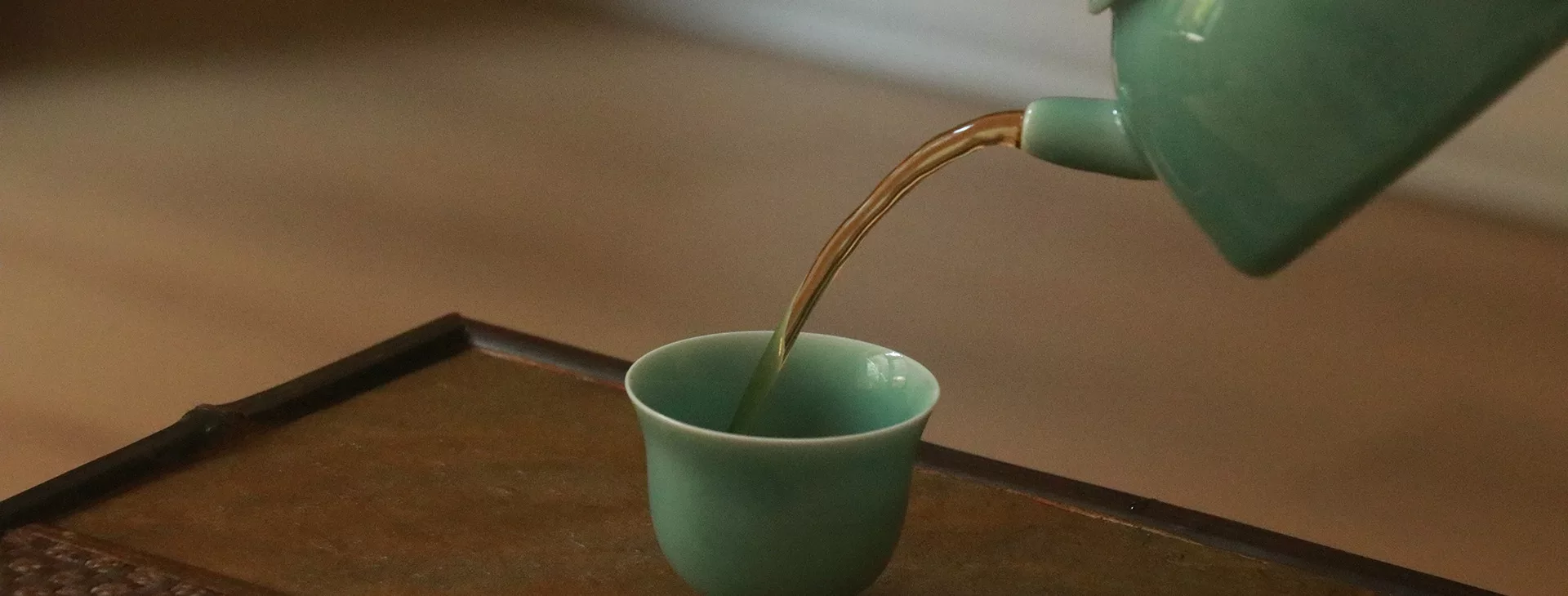
There is tea, and then there is the way some people drink it.
In Chaoshan, they do not simply make tea. They perform it — quietly, carefully, with a patience that can seem, to the uninitiated, almost excessive. Small cups. Small pots. Many infusions. No hurry.
They call it gongfu cha. “Tea made with skill.” “Tea made with care.” The word gongfu means anything acquired through patience and practice — martial arts, calligraphy, the ability to sit still and wait for the water to boil just so.
This is not about thirst. This is about taking time, and filling it with meaning.
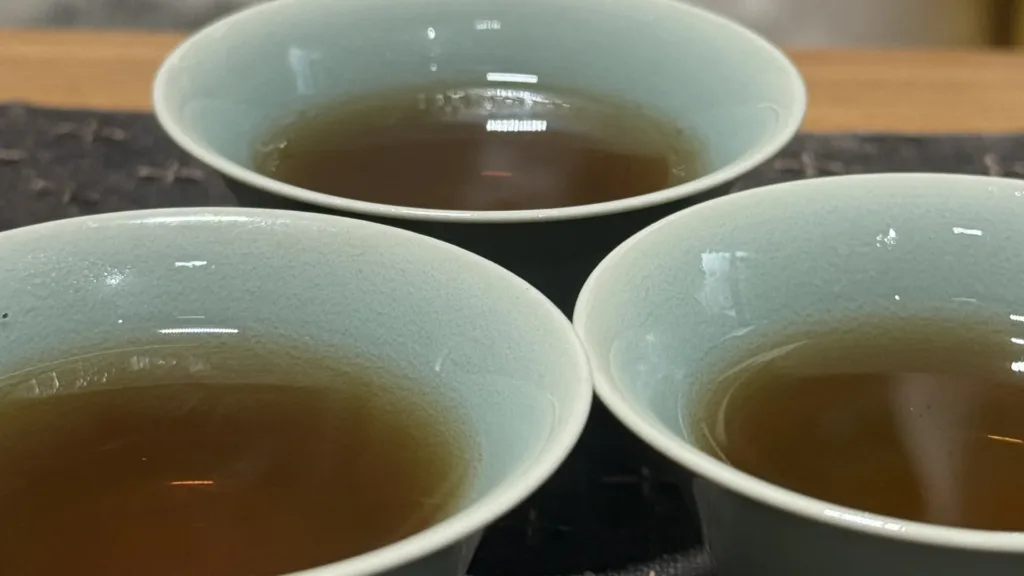
What is Gongfu Tea?
It is not a type of tea, though certain teas suit it best. It is a method — a precise, elegant ritual of brewing and serving that took shape in the Chaoshan region of Guangdong over a century ago, and has travelled since with every migrant who left home carrying a pot and the memory of how to use it.
In 2008, it was named a National Intangible Cultural Heritage. In 2022, it joined UNESCO’s Representative List as part of China’s broader tea culture. But long before the official recognition, it was simply what people did — at home, at work, at gatherings — when they wanted to make a moment matter.
The Tools
The old texts speak of four essentials:
A Xiaoshan pot — small, purple clay, Yixing-made, just big enough for three cups.
Thin white cups — delicate, porcelain, their size measured in sips.
A sand kettle — for boiling water, unglazed, breathing with the flame.
A clay stove — small, portable, fed with charcoal.
Today, the tools have evolved. Many use a Gaiwan — a lidded bowl that holds leaves and water and pours through a gap — and a tray to catch the spill. But the principle remains: small vessels, close attention, nothing wasted.
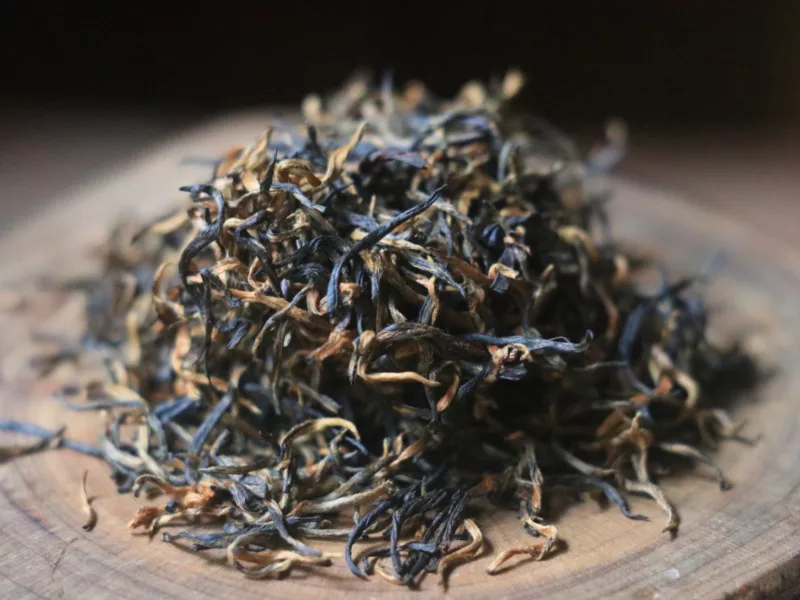
The tea is almost always oolong — semi-fermented, complex, built for multiple infusions. The local favourite is Fenghuang Dancong, a single-bush tea from the Phoenix Mountains whose name reads like a map of flavours: honey-orchid, gardenia, almond, even one called “duck-shit aroma” that tastes much better than it sounds.
The Way of Making
The water must be just boiled. Not rolling, not rested — just at that moment when the bubbles rise like fish eyes and the steam carries the first hint of what is coming.
The pot is warmed. The cups are warmed. The leaves go in — a generous amount, filling the pot a third, sometimes half. The first pour is a rinse, in and out, waking the leaves, opening them. Then the real work begins.
High pour — the kettle lifted, water falling from height to stir the leaves, to wake the fragrance.
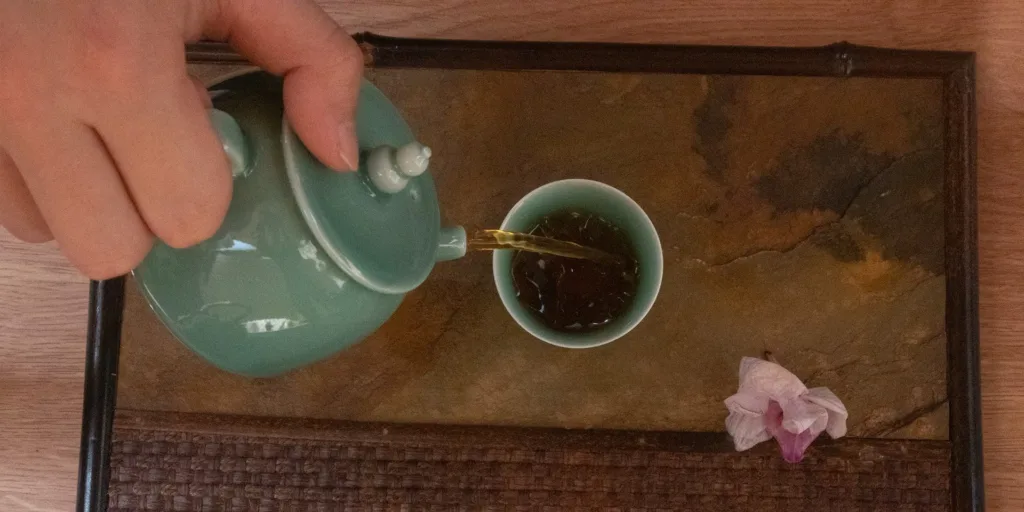
Low pour — the pot lowered, liquor flowing close to the cups, preserving heat, preserving the fine foam that carries scent.
When the tea is ready, the pouring becomes a dance. Guan Gong patrols the city — the pot moving in a circle, filling each cup in turn, ensuring every drinker gets the same strength, the same warmth. Han Xin counts his soldiers — the last drops shaken out, drop by drop, so nothing is wasted.
Before drinking, you lift the cup, turn it, breathe. The fragrance comes first — sharp, floral, alive. Then the taste, which changes with each infusion, revealing itself slowly, as if the tea is deciding whether to trust you.
The Manners
Do not fill the cup to the brim. Tea is served at seven-tenths; the remaining three-tenths are for friendship, for conversation, for the warmth that passes between people.
When someone pours for you, tap the table with your fingers — two taps, or three — a quiet thanks, a story whispered: once, an emperor travelled in disguise, poured tea for his servant, and the servant bowed without giving them away by tapping instead. True or not, the gesture remains.
Serve the eldest first. Serve the guest first. Serve everyone before yourself. The pot is small; the refills are many. There is always more tea, always another chance to offer.
The Meaning
The Chinese say: In tea, there is gongfu. In the pot, there is heaven and earth.
This is not exaggeration. In the small ritual of making tea — the waiting for water, the warming of cups, the careful pouring — there is a practice of being present. Of slowing down. Of attending to something outside yourself, and through it, attending to others.
The four spirits of gongfu tea are these:
Harmony — between people, between tea and water, between the moment and the mood.
Respect — shown in every pour, every offer, every cup received with both hands.
Precision — in the measures, the timing, the temperature, the tiny details that make the difference between good tea and tea that remembers being made well.
Joy — not loud, but quiet, the pleasure of sharing something that asks for nothing but attention.
Today
The young still learn. The old still teach. In Chaoshan homes, the tea tray is never far. In Chinatowns across the world, the same small cups appear, passed from hand to hand, carrying the taste of a place left behind.
Some things have changed. Electric kettles replace charcoal stoves. Young people post their tea sessions online. New teas find their way into old pots.
But the heart of it remains: small cups, slow sips, the willingness to sit with someone and do nothing but drink, and talk, and be.
To Close
Gongfu tea is not complicated, though it can seem so. It is simply the decision to take time with tea — to make it carefully, drink it slowly, share it generously.
It is the most ordinary thing, and the most profound. A cup of tea, made with care, offered with both hands, received with thanks. In that small exchange, everything is said.
If tea is China’s poetry of daily life, then gongfu tea is its most careful verse — the one that asks you to sit down, pay attention, and stay a while.
Small cup, slow sip.
One pot holds heaven and earth.
One cup holds everything that matters.
Related Products
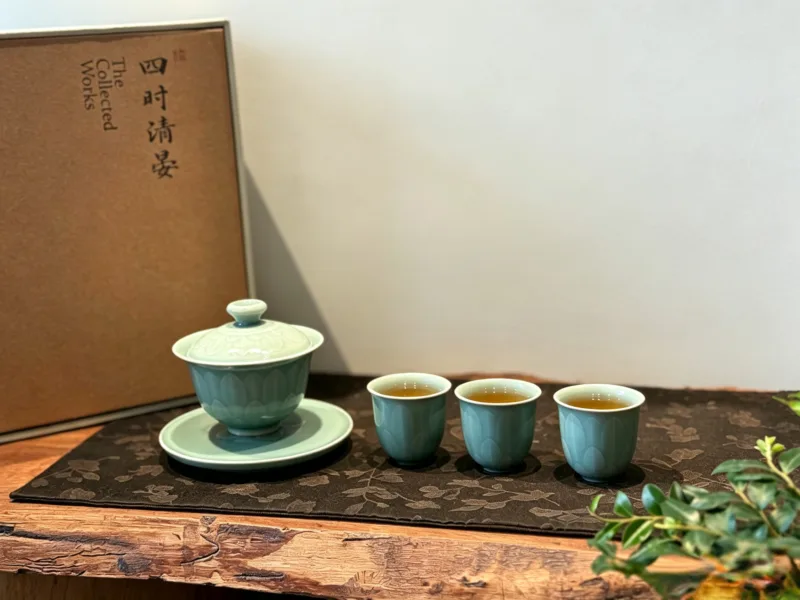
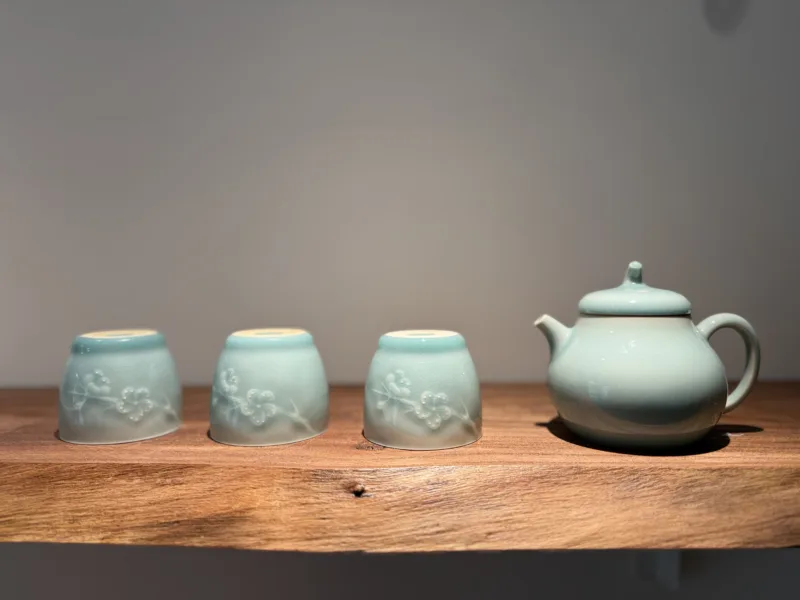 Longquan Celadon · Winter Plum & Pumpkin Tea Set
Includes: One pumpkin teapot and three plum blossom cups